
What is the dark night of the soul — and are you in one right now?
What the dark night of the soul takes from you, and what it allows you to see — told by someone who knows well this darkest of nights.
The dark night of the soul is a time in your life when everything that used to give it meaning stops working all at once, sometimes after a loss and sometimes for no reason you can name. Your work, your plans, the beliefs you grew up with or chose later, even the pleasures you could always count on — they are all still there, yet they no longer tell you who you are or why your days matter.
So, are you in one right now?
You most likely are, if the life you had a year or two ago has stopped fitting you and the next one is still out of sight. When someone asks you what the matter is, you find yourself without a real answer — because, on paper, everything is fine, or because the loss you can point to explains so little of what you feel.
And here is what you need to hear first: none of this is your fault.
What you are going through has had a name for more than four hundred years, because so many people have been there before you. You came to this page, in all likelihood, with three questions about the night — what is it, am I in one, and when will it end? — and you will find an honest answer to each of them here, along with five things to do in the night. Underneath those three questions, though, the night keeps asking you — better, keeps pressing on you — a fourth question of its own: who are you, once your old certainties fall away?
That fourth question, the question of who you truly are, is what my One & Only Truth Manifesto is about: a free piece of fifty short pages I wrote, and one evening is enough to read it (and, in another way, no evening ever will be).
Fill in the box right below, then confirm your address in the short email that follows, and I will send the Manifesto to you.
By subscribing, you agree to receive emails from me, and can unsubscribe at any time. Privacy Policy.
 Alex Exarchos — the author of this page and of the free One & Only Truth Manifesto.


Which of these signs of the dark night of the soul fit you?
John of the Cross, the sixteenth-century Spanish poet whose poem gave the dark night of the soul its name, listed three signs of his own in the long prose commentary he later wrote on that poem. In the religious language of his day, they are: no pleasure in the things of God or in anything else, a painful care and worry that you are going backwards, and an inability to pray or meditate as before.
In an ordinary life today, his three signs, and a few more, take the forms below. Count the ones that fit you.
Your life seems to be happening behind a pane of glass. You go to work, you answer your messages, you laugh at the right moments, and part of you watches all of it from somewhere further back, as if your own days belonged to a stranger.
Your pleasures have lost their taste. The meal you looked forward to, the music you would turn up loud, the friend whose call always lifted your day — all of them are still within reach, and all of them leave you exactly where they found you.
The old questions come back. Who am I, really? What is all this for? Is this it? Long ago you found answers that satisfied you and put the questions away. Now here they are again, and the old answers sound like something somebody else said on your behalf. At times you feel you are back where you started.
What used to steady you has gone dry. For many people it is something simple: a routine, a conviction, a sense of direction that kept them upright for years. For others it is prayer or meditation, a teacher whose words once carried them, a book they could open at any page. Whichever was yours, you reach for it now and find it empty.
(You keep reaching anyway. That, too, is a sign.)
The parts you could play so easily now cost you. The capable one, the cheerful one, the one who always knows what to do next — you can play all of them, yet each performance takes more out of you, and you feel the tiredness for hours afterwards.
The future loses its appeal. The next goal, the next trip, the next good evening are all in your diary, and your eagerness for them has faded.
Nobody around you can see the change in you. Your life looks the same from outside, so the people closest to you offer what helps with an ordinary bad patch: a weekend away, more sleep, a long talk over dinner. You thank them. You also know, deep down, that none of their remedies gets anywhere near the real trouble.
And yet — something in you will not settle. Beneath everything that weighs on you, there is a quiet, stubborn pull, a sense that the way you lived before is closed to you, even on the days when going back would be easier.
What every sign of the dark night of the soul has in common
Whatever your count, read the signs once more, all of them together.
In each of them, the night has taken something from you — a pleasure, a hope, an answer, a part you could play, the comfort of being understood. And in each of them, someone is there, noticing the loss: the one behind the glass, the one who reaches for what used to steady you, the one who feels the pull.
That someone is you. The losses are easy to see, and the one who sees them is easy to skip — and the One & Only Truth Manifesto is written around YOU.
By subscribing, you agree to receive emails from me, and can unsubscribe at any time. Privacy Policy.
Why is your night called the dark night of the soul?
The name is older than any book or video where you have come across it.
The phrase goes back to John of the Cross, a Spanish poet who lived from 1542 to 1591 and was a friar of the Carmelites, a Catholic religious order. On the night of 2 December 1577, friars of his own order who opposed his reforms took him prisoner.
What followed lasted more than eight months.
They held him in their monastery in Toledo, in a tiny, stifling cell barely ten feet long and six feet wide (about three metres by two), and at least once a week they brought him out to be whipped in front of the other friars. On 15 August 1578 he forced the hinges of his cell door and escaped through a small window.
What he wrote in those years gave your night its name.
Some time between 1577 and 1579 — scholars cannot pin down the year — he wrote a short poem in Spanish and gave it no title. The poem is set on a dark night: a soul slips out of its house unseen, while the household is at rest, and by the third of the poem's eight verses the soul's only guide is the light burning in its own heart. A few years later, between 1584 and 1586, he began a long prose commentary on the poem's opening lines, and left it unfinished. The poem and the commentary are known today by one name — Dark Night of the Soul.
That is why the name of your night speaks of the soul: in John's poem, it is a soul that goes out into the dark.
(In the poem he even calls the night "the happy night", and you will find those words again further down.)
What does the dark night of the soul mean today?
John wrote about believers, and his three signs speak the language of prayer. Over four centuries the phrase left the monastery, and today it means a crisis of faith — in God, in a career, in a plan, in a marriage, or in the person you took yourself to be — or, more widely, any difficult and painful period of life.
You do not have to share John's Catholic faith for his words to fit your night.
There is one word in the name of your night worth a second look, though: soul. The One & Only Truth Manifesto gives that word a precise meaning. What the words "Spirit" and "Soul" refer to, it says, is "your innermost Truth, the spiritual cradle, and unshakable foundation of your existence" — and in its pages that Truth is your awareness itself. Read in that sense, the old name tells you two things at once: the night falls on everything you have, and what sees the dark is the soul, which is to say you.
Who else is in a dark night of the soul?
The answer is anyone for whom the old meanings have stopped working — people of every faith and of none, people who have lost someone and people who have lost nothing that shows. A phrase survives for centuries only because people go on needing it, and so the name gives you something before anything else does: company.
Look at the three ways below, and see which one brought the night to your door.
After a loss. Something broke — an illness, a death, a separation, the end of the work you were known for — and the night came in behind it. The loss is real, and you grieve it. And yet the night that followed seems to reach further than the loss itself, into every corner of your life that the loss never touched.
(Both can be true at once: the grief, and the night beyond the grief.)
With no loss at all. Your life looks fine on paper — your career, your home and your plans are all in order — and one ordinary morning none of them tells you why you are getting up. Even the cause of your night escapes you, which makes the night harder still to explain to the people around you, and harder to admit to yourself.
(You may even feel you have no right to complain — and the night grows lonelier for it.)
After years of searching for answers. You have read the books, tried the practices, listened to the teachers, and you could explain the dark night of the soul better than most of the articles about it. Even so, the explanation does nothing for your night, and every practice that once kept you going now stops at the same wall.
Whichever way the night came to you, it does the same work in you: it takes away whatever gave your days their meaning.
Why does the dark night of the soul keep coming back?
If the night has visited you more than once, you are far from alone. The natural reaction is to wait for it to pass, or to fill the gap with something new: another plan, another project, another place. That can buy a few good weeks. Then it comes back: what has stopped working is the way you have been looking at your whole life.
Waiting and filling the gap share one move: both keep your eyes on what is missing — the old meaning you hope to recover, or a new one to put in its place. So the night comes round again and again, pointing you somewhere you are not looking.
What is the night pointing at? It points at you, the one who is looking.
Plans, projects and places replace one another, and the same YOU is there before each of them, during each of them and after each of them. When the dark night of the soul hollows out everything else, YOU are what is left to see.
And the One & Only Truth Manifesto puts its key question to that YOU: is there anything in your life that never changes?
By subscribing, you agree to receive emails from me, and can unsubscribe at any time. Privacy Policy.
When does the dark night of the soul end?
Nobody can give you an honest date for the end of your dark night. For some people the night lasts weeks, for others years, and it can lift for a season and come back.
What you can change is where your attention goes while the night lasts.
As long as you keep your attention on the end of the night, every day measures the distance still ahead of you. You count the weeks, then the months, and each month that passes makes the dark heavier. The one who counts, though, is the same in the first week as in the fortieth.
Return for a moment to John of the Cross, and to his poem.
In its third verse, with the dark all round the soul, John writes of "the happy night". Two verses later he goes further, and praises the night itself as "more lovely than the dawn".
So, then, my answer to "when does it end?" is a question in return: who, exactly, is doing the waiting?
Is your night the dark night of the soul, or depression?
Make no mistake: the dark night of the soul is real, and so is depression, and one person can go through both at the same time. From outside, and even from within, the two are hard to tell apart, because several of the signs above belong to both: the lost taste for everything, the fading eagerness for what lies ahead, the tiredness after every performance.
The dark night of the soul is about meaning: what made sense of your life no longer does. Depression is a medical condition, and a doctor is the right person to look at it with you.
The NHS, the UK's national health service, advises: "See a GP if you experience symptoms of depression for most of the day, every day, for more than 2 weeks." A GP is a family doctor, and wherever you live, please go to yours before anything else, whatever you call what is happening to you.
What follows matters more than anything else on this page.
If you ever find yourself thinking about ending your life, please speak to someone now — a friend, a doctor, or a free helpline: 116 123 (UK and Ireland), 988 (US and Canada), 13 11 14 (Australia). If you ever think of harming yourself, call your local emergency services straight away: 999 or 112 (UK and Ireland), 911 (US and Canada), 000 (Australia).
Five things to do in the dark night of the soul
The five suggestions below are for your time in the night. None of them is a way out of the night, and there is no method I can hand you for that.
Call it by its name. "Something is wrong with me" and "I am in the dark night of the soul" describe the same months of your life, yet the two sentences feel very different day to day. The first is an accusation. The second puts you in the company of everyone who has lived through this night since John of the Cross, and gives you a real answer the next time someone asks you what the matter is.
Resist the next fresh start. When the urge comes to fill the gap the old meaning left — a new plan, a new course, a move to another city — notice the urge, and let it pass without acting on it.
Look after your body. You already know what your body needs: regular sleep, proper meals, daylight. These three keep you steady enough to stay with the question at the heart of the night: "Who am I, really?"
(Ask anyone who has tried to think about the meaning of life on four hours' sleep.)
Tell one person the truth. Choose a friend, a partner or a relative you trust, and describe your night to them in your own words, without asking them to fix anything. From then on, one other person knows that your night is there.
Once a day, try the one-minute question. Take one quiet minute and, in place of "when will this end?", ask yourself "who is noticing this night?" Stay with the question for the rest of the minute, and let every answer in words go by as it comes.
Try it now, before you read on — one minute, by the clock.
Are you back?
The One & Only Truth Manifesto invites you to do something very close to this in its own pages: to watch your thoughts appear and disappear for a few moments, without engaging with them — and then it asks you, exactly as I just did, "Are you back?" That minute was a small foretaste of the Manifesto, whose fifty pages start from the same place and go much further.
By subscribing, you agree to receive emails from me, and can unsubscribe at any time. Privacy Policy.
What the dark night of the soul takes from you, and what it allows you to see
Take an ordinary evening in your night.
You are at a table with people you care about. Somebody tells a story, everybody laughs, and you laugh too, a moment late, from somewhere behind the pane of glass. The food tastes of very little. The part of the cheerful one, which you used to play without a second thought, costs you the whole evening. And on the way home, someone asks whether you are all right, and you hear yourself say, "Fine — just tired."
Go back over that evening, and list what the night has taken from it.
The night has taken the taste of the food and the pleasure of the story. It has taken the ease of the part you used to play, and with it a piece of the picture you had of yourself. On other evenings the night takes more: the sense that your work matters, the plan you were following, the beliefs that used to explain your life to you, the comfort of a prayer, a practice, a teacher. One by one — better, all at once, and then one by one all over again — the night takes away whatever can be taken.
Now look at your list. Who noticed each of these losses?
Every item on your list is something you can lose, and the night has made sure you know it. The one who notices the laugh coming a moment late, who finds the food bland, who hears the word "Fine" leave your own mouth, is still here, reading these lines — and the night takes nothing from that one at all.
That one is what the night allows you to see, once everything else has gone dark — who you truly are, in the Manifesto's own words.
A loss takes something away, and for you to notice that it has gone, someone has to stay. The Manifesto turns this into an argument: change, it says, can be identified only against "a constant, changeless background".
The night, of all times, makes that someone easier to see, and for a simple reason.
While your work, your plans and your pleasures are all lit up, they fill your whole view, and the one looking at them is the last place your attention goes. The night switches those lights off, one after another. And with every light that goes out, whoever is looking gets a little harder to overlook — which may be the only kindness the dark night of the soul has to offer you, and it is no small one.
Why read the One & Only Truth Manifesto in the dark night of the soul?
I can hear you protesting: "I came here to understand my night — so why are you handing me a Manifesto?"
I hear you, and the full reason starts with a fact about the Manifesto itself: the words "dark night of the soul" appear nowhere in it. The Manifesto is about who you truly are: the one part of you that stays the same while everything else changes. Page by page, it goes through all that you take yourself to be — your possessions, your thoughts, even the story of your life — and shows you that you could lose any of them.
And the losses the Manifesto takes up, chapter by chapter and on purpose, are very nearly the ones on your list.
Under the heading "Are You Your Body?", the Manifesto looks at a body that changes all the time — the same body that, in your night, tires for hours after every performance. Under "Are You Your Mind?" it calls your mind "a long sequence of changing thoughts", your old answers among them, and it treats your feelings the same way, since they too come and go.
The Manifesto sets aside every characteristic you have attributed to yourself, "directly or indirectly, through others" — the capable one and the cheerful one included. It lists your name, your work, your family, your house, your savings, even what you have learnt over many years, and says of them all, in one heading: "You Can Lose Any Of Them, In Any Given Moment."
And under "You Are Not Your Life", the Manifesto takes up the story of your life itself — the story that, in your night, seems to be going backwards.
In other words, the night has already done half of the Manifesto's work for you (the harder half, perhaps, and one you never chose).
The night and the Manifesto differ twice: in the way they take, and in the half the night leaves undone. The night takes, and goes on taking, and asks your permission for none of it. The Manifesto takes you through such losses in thought, with your consent, one at a time, and then it stops at the one item that can never appear on your list: you, who notice every loss.
In this regard, someone in calm weather has to imagine losing a role or a certainty to follow the Manifesto's questions. You are living through such losses right now, so its questions reach you at the moment when they can sound least like theory.
What the dark night of the soul leaves untouched
The Manifesto's answer to what remains comes in two steps.
Early on, under the heading "It Is, Of Course, YOU", come three lines: "Wherever you go, there you are. Whatever happens, there you are. Whoever you meet, there you are." Then the Manifesto corrects itself: "Or rather: HERE You Are!"
Much later, once it has gone through everything you could lose, the Manifesto names a light, much as John's poem names one as the soul's only guide in the dark. The question there reads "The Light that never goes out — what is It?", and the answer follows: "It is your consciousness, your awareness, your attention." (Whether John's light and this one are the same, I leave for you to judge.)
Something in you never changes, and that, and nothing else, is what the Manifesto calls the One and Only Truth.
And this is the sense in which the One and Only Truth is the way for you in the dark night of the soul…
… a way that is open to you in the night itself, since nobody can honestly promise you a way out of it. This way is a turn of your attention: from waiting for the night to end, to the one who is in the dark and is reading this sentence now.
The night can go on taking. What it leaves untouched is the one it is taking from — and that one is where the Manifesto keeps your attention, from the first page to the fiftieth.
By subscribing, you agree to receive emails from me, and can unsubscribe at any time. Privacy Policy.
When you press the button above, a short email comes to you, asking you to confirm your address. If you cannot find it, check your spam or promotions folder. Click the button in that email, and the free Manifesto is on its way to you — and the page that opens lets you start reading straight away.

What the One & Only Truth Manifesto asks of you
Short as it is, the Manifesto asks you, out loud, the few questions you have kept at arm's length for years, and then it stays with you while YOU answer them. In its second half, the Manifesto follows the One and Only Truth further still: into what the religions have called God, into good and evil, into fate and free will, and into the old suspicion that life is nothing but a dream.
The Manifesto also declines to put a date on your answer, much as this page declined to put one on your night.
Grasping the answer, the Manifesto says, might take one minute, one decade or a whole lifetime. It asks you to devote your full being to "finding — better, realising — the answer to the question of your true identity", and, at the same time, to stay "playful, stressless and open-ended".
Remember who you are. Realise that who you are depends on nothing you can lose. Reclaim your everyday life from there.
Go back, one last time, to that evening at the table. The laugh still comes a moment late, and the food still tastes of very little. What the Manifesto asks of you is a turn of your attention, towards whoever notices the late laugh — and whether and when that turn comes to you is for you to find out.
And you can check every step of this for yourself. In fact, that is the only way the Manifesto works.
The question at the start of the One & Only Truth Manifesto
I test the One and Only Truth against three conditions. It must be timeless — untouched by the change that touches everything else. It must be fundamental — the Ground everything (by default) stands on. And it must be all-encompassing — leaving nothing, including you, outside of it.
Now, then, set your night beside the first condition. Whatever the night can take from you changes, and so it fails the test of timelessness on the spot — which means that your night, with every loss, is sorting your life for you into what changes and what does not.
Ask yourself, out loud: Is there anything in your life that never changes? Anything that Time cannot touch?
If there is — and there truly is — then that is where the Manifesto begins.
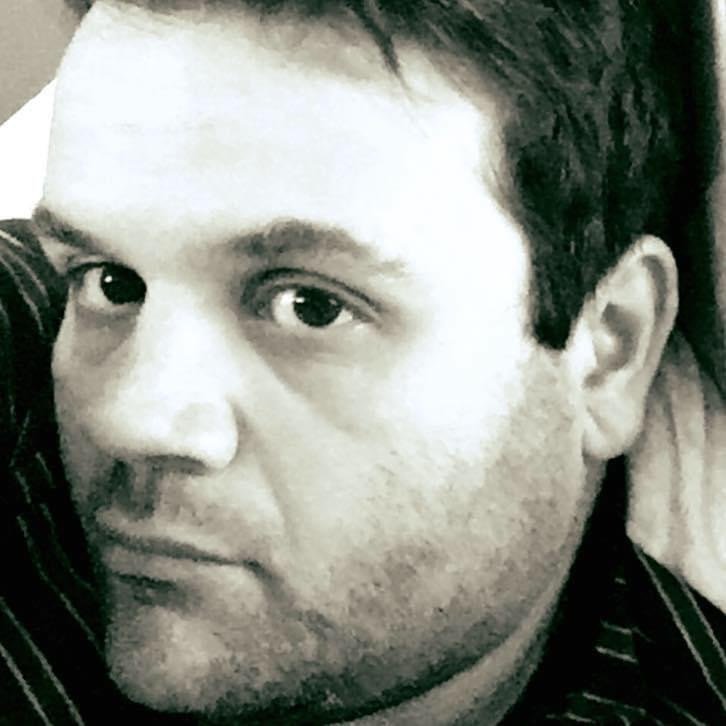
Who is writing to you about the dark night of the soul?
I know this night from the inside. At fourteen, for months on end, the world seemed to move away from me, as if a filter stood between it and my eyes. Much later, in a career that looked perfect on paper, I felt more strongly than ever that I was wasting my true potential — and in 2024 several strokes brought that career to an end.
Your life may look fine on paper, too.
Before the strokes, I sang as a tenor in two choirs, and now I cannot sing any more. The strokes also left me with dysarthria, a speech disorder that makes me speak more slowly than I used to. The voice I sang with has gone, and I am still here, writing these lines to you — much as you, who have noticed every loss of your night, are still here, reading them.
Today I am the forerunner, and the forerunner stays in front so the others know — and FEEL — that the path ahead is actually walkable.
I promise you no "arrival" — there is none to promise.
What you have in me is someone who walks slightly ahead of you in the dark: close enough for you to feel that the road is real, and far enough for you to see that this road goes on, night or no night — and that it is meant to.
I can give you what you've been chasing your whole life — but can you actually take it?
Read the Manifesto in one evening, and then, if you like, read it again on a hard evening of this night — and see which of its pages are still true for you.
Take my hand and let's walk together, even in the dark. There is nothing to fear — there never was, and there never will be.
By subscribing, you agree to receive emails from me, and can unsubscribe at any time. Privacy Policy.
(Twenty-five years of inquiry mark a road I am still on — and you are welcome on it too. My books are the trail so far, and it leads to no "final destination" — that is the whole point.)
If tonight feels unbearable, please talk to someone now — a person you trust, or a free helpline: 116 123 (UK and Ireland), 988 (US and Canada), 13 11 14 (Australia).