

Every frustration you have ever felt has the same hidden shape — a line drawn between you and something you have decided you are separate from — and the line is not real
Think of the last time you were frustrated — not a grand crisis, just something perfectly ordinary: the traffic that would not move, the person who would not understand you, the work that would not come out the way you wanted, the version of yourself you cannot seem to become. Whatever it was, notice the shape the feeling had: there was you, and there was whatever stood in your way, and between the two of them a hard line of friction, where your will pressed up against it.
That line is the entire subject of this piece. Behind every frustration you have ever felt — every single one, including the one you may be carrying right now — lies the same hidden structure: a separation you have drawn between yourself and something you have decided is not you, not yours, not on your side. It feels like the most obvious fact in the world. And it is, I want to suggest to you, not real.
Frustration is the friction of a self pressed against something it has set apart — "me" on one side, the thing thwarting me on the other — and every frustration you feel is built from exactly this split
Look closely at the mechanism, and it is always the same. Frustration is what happens when a self runs up against something it has placed outside itself and labelled an obstacle. There is the "I" that wants — wants the delay to end, the person changed, the work finished — and there is the "not-I" that refuses to comply. What you feel as frustration is nothing but the pressure between those two: the heat of a will pressing on a world that will not bend to it.
And notice what has to happen first, before any frustration is even possible. You have to divide the situation in two. You have to draw a border, with yourself on the inside and the offending part of the world on the outside, and then take your stand there. Without that division, there can be no frustration. The feeling does not come from the traffic, or the person, or the unfinished work. It comes from the line you have drawn between you and them — and from your quiet conviction that you stand on one side of it while they stand on the other.
Look and you will find the same four divisions — you against the outcome, you against another person, you against this moment, you against yourself — each one a self set against what it has cast out as not-itself
Once you start watching for this border, you begin to find it everywhere, drawn again and again in four recurring places. There is you against the outcome: the result that should have gone your way and did not, the plan that reality declined to follow. There is you against another person: the partner, the colleague, the stranger who should be other than they are. There is you against this very moment: the now that should not be happening, the wait, the delay, the inconvenient truth of the way matters currently stand. And there is the most intimate division of all — you against yourself: the person you should already be, the habit you cannot break, the failure you keep finding in the mirror.
Four frustrations, four apparent obstacles — and yet underneath them, one identical move. In every case you have taken some piece of reality and cast it out as not-yourself, and then set yourself in opposition to it. The outcome, the other, the moment, even your own self: each one gets exiled to the far side of a divide and reclassified as what stands in your way. The cast of characters changes from hour to hour. The structure beneath it never does.
But the separation is drawn, not found — it is a cut your mind makes across a situation that was never, in fact, divided
Here is the turn, and everything depends on it. That dividing line you keep arriving at — the one that feels like a plain feature of reality, as solid and factual as a kerbstone — is not something you discover already there in the situation. It is something you draw. The mind makes a cut, swift and all but invisible, across a field that a moment before was whole — and then it forgets it has done any cutting, and reports back that the division was simply there all along, waiting to be noticed.
Watch it happen in one small example. The rain begins just as you leave the house. In the first instant, before any thought, there is only this: wet air, grey light, the cold touch on your skin. Then comes the cut — me, and the rain that is ruining my morning, me set against it. The frustration arrives in the very same breath as the separation, because it is that separation, felt from the inside. The rain did not frustrate you. The line you drew between yourself and the rain did.
And the cut is false — in truth you are not separate from the moment you are in, the person across from you, or the life moving through you, and the "me against it" is only a story laid over what was always a single unfolding
And here is why that cut is, in the deepest sense, false: the two sides it claims to divide were never actually two. You are not standing outside this moment, watching it from somewhere separate — you are the moment, happening. You are not sealed off from the person across the table — the same life is looking out through both pairs of eyes. You are not set apart from the rain, or the traffic, or the unfinished work — every bit of it is arising in the one seamless field in which you also arise. The "me" and the "it" are two ripples in a single ocean, each insisting it is not the other.
This is the recognition that the great non-dual teachers devoted their lives to pointing at: that the separate self, the skin-bounded "I" set against a world of objects, is closer to an optical illusion of consciousness than a fact of nature. Alan Watts gave it its clearest modern name — the taboo against knowing that you are not a separate ego at all, but the universe itself, briefly wearing your face. You do not, in the end, have a separation problem with the world. You have a case of mistaken identity — and frustration is one of the sharpest ways it makes itself felt.
Seeing through the separation does not make you passive — the boundary is false, but the harm can be real, and you still leave, still refuse, still change what must change, only now without the old inner contraction
Now, I have to guard this against a misreading, because the instant people hear "the separation is false," many of them take it to mean something I am not saying. They hear: so nothing matters, nothing is worth resisting, just melt into acceptance and let the world do as it pleases. That is not it at all. The boundary you draw in frustration is false — but the harm in the world is often entirely real. Cruelty is real. Injustice is real. A situation that genuinely needs to change is real, and seeing through your separation from it does not oblige you to go limp.
What changes is not whether you act, but the state you act from. You still leave the room. You still refuse the bad deal, set the boundary, say the hard no, move to change whatever must be changed. Indeed, you can meet what is happening fully and work with all your strength to change it, without adding the second arrow of resistance that turns ordinary pain into suffering. The action no longer comes braided together with the old inner contraction — that clenched insistence that this must not be so, running underneath you even while you deal with the bare fact that it is. You tend to do more, not less, and you do it with clearer eyes, because you are no longer spending half your strength defending a border that was never solid in the first place.
So frustration stops being a feeling to suppress or manage and becomes a signal — a finger pointing at the exact spot where you are holding a separation that will not survive a closer look
This is what quietly changes your entire relationship to the feeling. As long as you believe your frustration is caused by the obstacle out there, you really have only two options: suppress it — grit your teeth, breathe, count to ten — or vent it — snap, complain, push harder. Both treat the frustration as a problem to be controlled. But the moment you see that every frustration is the felt edge of a border you yourself have drawn, the feeling turns into something far more useful. It becomes a signal — a remarkably precise one.
Frustration becomes a finger pointing — not outward at the world, but back at you, at the exact place where you are clinging to a separation that would not survive a steadier look. Wherever you feel that familiar heat beginning to rise, you can stop and ask the one question that genuinely helps: where have I drawn the line this time? What have I cast out as "not me, not mine, opposed to me" — and is that separation actually real, or have I simply drawn it again out of long habit? Your frustration stops being a problem to be rid of. It becomes the most reliable alarm you own, and it sounds at precisely the moment you have forgotten what you are.
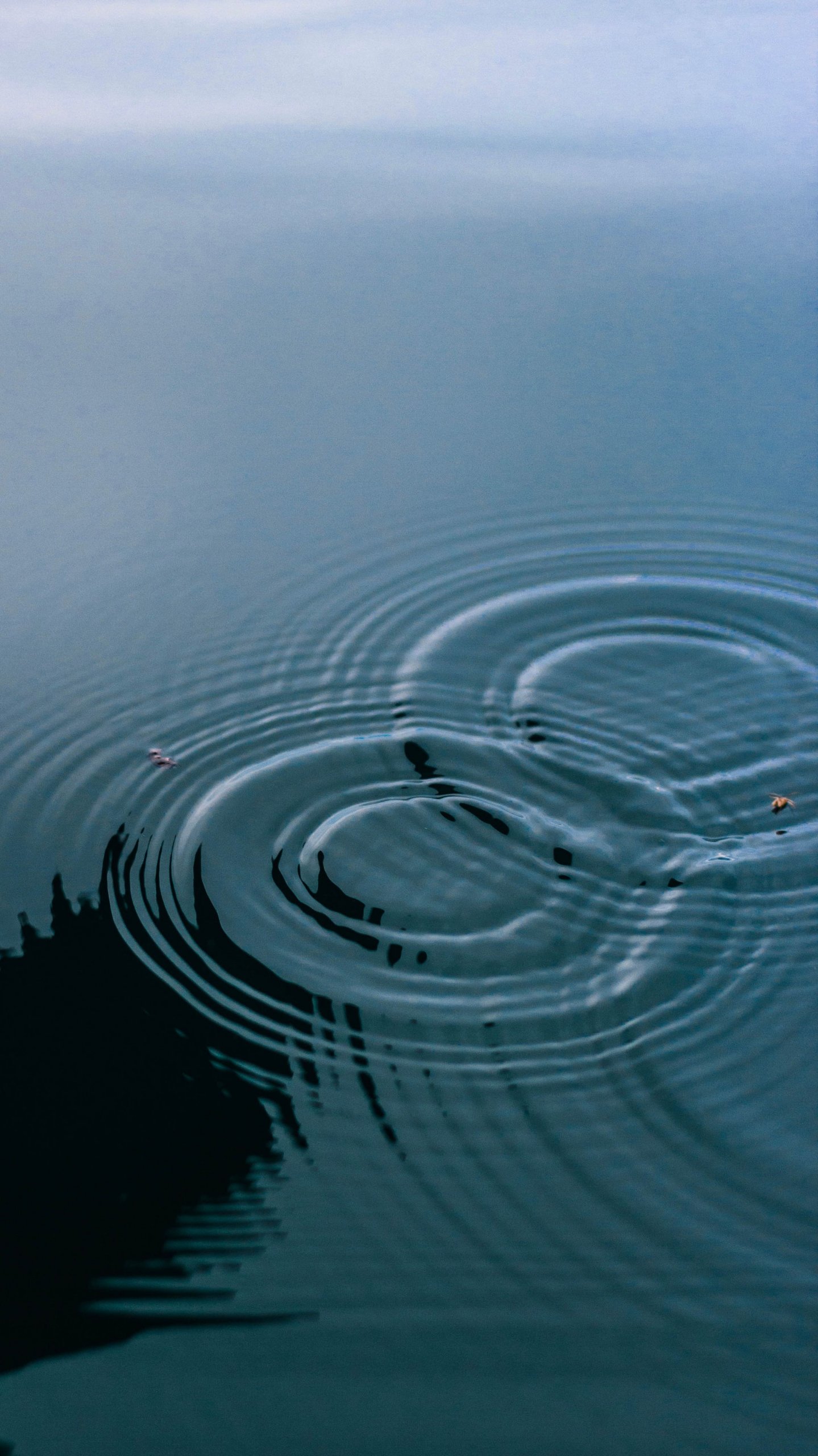
And when you see the separation was never there, the frustration has nothing left to push against — it loosens on its own, not because you forced calm, but because what it pressed against was never solid
And in the very moment you actually see this — not merely think it, but truly see it — the separation softens, and the frustration, which was only ever the pressure of your will against it, discovers it has nothing left to press upon. It needs no technique at all — no suppression, no release, no slow work of breathing it down. It loses its object entirely. You had been leaning your whole weight against what felt like a solid barrier, and the barrier turns out to be a line drawn in the air. Your hand passes straight through, and the pressing stops, because there is nothing left to push.
This is not a calm you manufacture. Manufactured calm is only the frustration kept down by force, and in the end it always leaks. This is something else entirely: the quiet that arrives on its own when the very basis of the agitation is seen to be unreal. What is left when the separation goes is not emptiness but the undivided awareness in which the whole drama of me-against-it has only ever appeared and passed. The separation relaxes back into the single field it was always part of, and the frustration relaxes along with it — not suppressed, not forced away, simply unfound, the way a knot is "gone" the instant you see it was only ever a trick of the rope.
I have not dissolved every separation, and I still draw them and feel them bite — but I am learning to catch the line as it forms - and that noticing, not some arrived freedom, is what I have to offer you
I want to end where honesty makes me end, which is some way short of the mountaintop. I have not dissolved every separation in myself — far from it. I draw these lines a hundred times a day: at the slow driver, at the misunderstanding, at my own reflection — and I feel them bite, the old heat rising in me exactly as I have described it to you. I am not writing from the far shore of some serene, borderless freedom. I am writing from the middle of the same difficulty you are standing in.
What I can honestly tell you is that the lines have begun to feel less solid. I spot a few of them now as they form, and every so often I manage not to believe the one I have drawn — and the frustration, denied its border, quietly comes apart. That is all I have to give you: not arrival, but a slowly sharpening eye for the cut as it happens. It is the one thing I can honestly share — not a freedom I have reached and can hand down to you, but a noticing I am still learning myself, a few steps further along the same road. You are not separate from the life that frustrates you. You never have been. And the noticing of that, again and again, gently and without force, is the work itself — for you every bit as much as for me.