

Every superpower on sale must be built and maintained — your default state is the only one that is already installed and cannot be lost
The word wears a cape, and lately it is everywhere: interviews ask you to name one, coaches promise to build you one, whole feeds exist to list the seven you are still missing. Lift the cape, though, and an old sales pitch appears — you, as delivered, are not enough, and the missing part must be fetched from outside. The pitch works because it flatters the part of you that loves a project, and no project is more absorbing than your own upgrade.
This piece makes the opposite case, and makes it without blinking: the only capacity worth the big word is the one nobody can sell you, because you did not acquire it and cannot mislay it. It is the state you are in before the first improvement of the day — the one this piece calls your default. Everything added to it can be impressive. Nothing added to it can be permanent — and a power with an expiry date is not a power. It is a rental.
Look at what gets called a superpower these days — habits, routines, focus, morning rituals — every one of them something you must add to yourself
Run through the current catalogue. The five-o'clock start. The cold water. The eighty-book year. The deep-work blocks, the dopamine fasts, the second brain, the tenth journal. None of these is worthless — some are genuinely pleasant — but notice what every single one has in common: none of them is you. Each is an attachment, bought or borrowed, fitted onto the person who existed before it arrived.
And notice the quiet accusation inside the whole catalogue, because the accusation is doing all the work. If power must be added, then what you already are must be a deficit — your mornings wrong until engineered, your attention broken until trained, your ordinary hours a problem awaiting a programme. Nobody states the premise out loud, because out loud it sounds absurd: you were shipped defective, and the fix is sold separately. Yet that is the exact belief a whole industry needs you to keep. There is also a mechanical problem with every added power, and it is not small.
Every added power needs fuel — and when it runs dry, you are back in the one state that burns nothing
Discipline is expensive. Not wrong — expensive. The early alarm costs willpower, the cold water costs comfort, the deep-work block costs the constant supervision of a mind that would rather wander. Every acquired capacity draws on a reserve, and reserves behave like reserves: they empty. A hard week, a bad night, an illness, a grief — and the whole impressive arrangement comes down quietly, usually all at once.
What stands there afterwards is instructive, if you can bear to look at it. Not nothing — you. The person who was underneath the additions all along, breathing, noticing, still here. You have seen this shape on this blog before — the deepest movements in you run without a cause and without an effort — and the default is exactly that: the part of your life that was never plugged into anything, and so can never be unplugged. Most people treat that remainder as the embarrassment to be fixed by Monday. Look closer.
Your default state is who you are at the most elementary level — the one that cannot be reduced any further
Take yourself apart, layer by layer, the way an honest inventory would. Remove the job title — someone is still there. Remove the routines, the achievements, the reputation, the plans — still there. Remove even the moods, which come and go on their own weather — and what is left is not a blank. It is the one in whom all of it was appearing: awake, aware, unmistakably you. That is the floor. Below it there is nothing to strip away, because everything else stood on it.
And here is why the big word belongs to this floor and to nothing above it: every quality on the upper storeys exists by maintenance, and this one exists by itself. You cannot forget to do it. You cannot fail at it on a bad day. Nobody can out-train you at it, undercut you at it, or take it from you at the exit interview. The market cannot price what it cannot withhold — which is precisely why nobody advertises it. Only a handful of writers have taken this seriously enough to study it properly. One of them went looking for its mechanics.
Edward Slingerland calls it trying not to try — the old discovery that your best state only comes when you stop working for it
He is a scholar of ancient China who noticed that the oldest texts in that tradition circle one embarrassing fact: the qualities people want most — ease, presence, charisma, grace — flee from direct pursuit. Chase spontaneity and you get performance. Force relaxation and you get tension with better posture. The old teachers named the way out wu-wei, effortless action — doing that flows from what you are instead of from what you are straining to become.
He put the research and the old texts into one very readable book — the power the masters promised, it shows, comes only through the door you stop pushing — and one detail in it belongs here: those texts had a word, de, for the quiet force that radiates from a person in that state, the presence others trust on contact. De cannot be manufactured. It shows up exactly when trying stops — which makes it, in plain terms, the oldest recorded description of your default state operating in public. My own vocabulary is smaller and more personal, but it found the same place by another name.
There is an older name for your default state — the Ground, the foundational layer of Life — and it does not need you to run it
Readers of this blog have already heard it speak in its own voice — a whole page of sentences straight from the Ground, with no essay around them — and two of those sentences carry more than this whole essay can: the Ground is all-encompassing detachment, and only the Ground produces authentic transmissions, the ones that cannot be planned.
Notice what the older name adds to the newer one. A default can still sound like a setting inside you, one more feature of the machine. The Ground goes deeper than the machine: it is what holds the machine, the layer that was never installed because it was never absent. It asks nothing of you by way of upkeep — no dashboard, no maintenance schedule, no login. Whatever you construct stands on it. Nothing you add improves it. Nothing you tear down scratches it. None of which means throwing your calendar away.
Keep your habits and your discipline — they are useful tools — just stop using them as evidence that you are not enough without them
This piece is not an argument for lying in bed. Structure has real uses: the run clears the head, the routine protects the writing hour, the plan keeps the week from dissolving into noise. Use all of it. The correction is aimed at something subtler — the spirit in which the additions are made. There is a difference, invisible from outside, between a person who trains because it serves the day, and a person who trains to escape who they are when the session ends.
The first person's habits are furniture. The second person's are a courtroom case that must be argued again every single morning — look at all the machinery it takes to make me acceptable — with every routine submitted as one more exhibit. Same behaviour, opposite verdicts. The arithmetic of the second position is merciless, because a case argued daily needs daily fuel, and nothing human burns forever. If you want to know which of the two you are, there is a cheap way to find out.
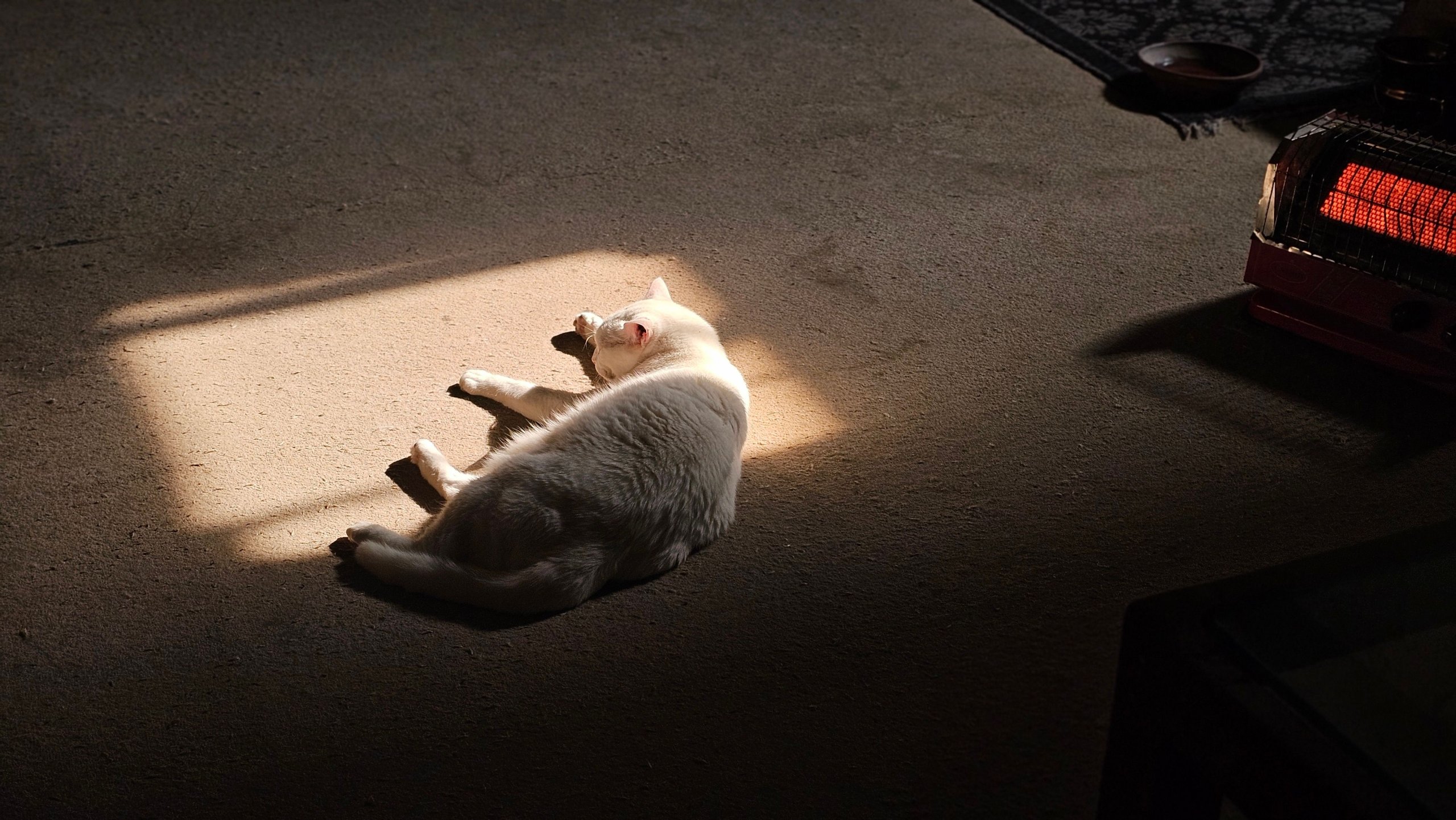
Give yourself one hour without overriding anything — do no fixing, no improving, no performing — and watch what still remains afterwards
This is not a technique — there is nothing to get right and no score at the end. Pick an ordinary stretch of an ordinary day and simply decline, for that stretch, every impulse to upgrade the moment: the reach for the phone that would improve the wait, the plan that would improve the evening, the observation that would improve you. Decline them gently, the way you would wave off a waiter — not now, thank you — and stay with whatever is actually going on.
The first minutes itch, because the overriding reflex has had years of employment. Then something quietly clocks off, and what settles in is not emptiness but ordinariness with the lights on: the room, the body, the day, all running fine without a supervisor. That is your default, met directly — smaller than the advertisements promised, and the only power on this page that was there before you tried and will be there after you stop. I would like to say I live from it permanently. Here is the truth instead.
My best days are never the ones I engineer — they are the ones where I stop early and simply live exactly as I anyway am
The relapse in my case has a familiar shape. A morning arrives with big plans attached, I load the day with structure, decide that this week the improved version of me will finally show up and stay — and by mid-afternoon I am managing a small, tense project called myself. Nothing dramatic fails. The day simply tastes of administration.
And then there are the other days — the ones where the plans fall through by ten and I give up on engineering anything. Those are, with embarrassing consistency, the days the real work happens: the sentence that writes itself, the conversation that goes somewhere true, the hour that needs nothing added to it. I do not control which kind of day comes. I only notice, again and again, which kind actually carries me. If you ever want a fellow seeker beside you, rest assured that you don't need any upfront upgrading — come exactly as you anyway are. Your only superpower is your default state. It was installed before your first plan, and it will outlast every one of them.