
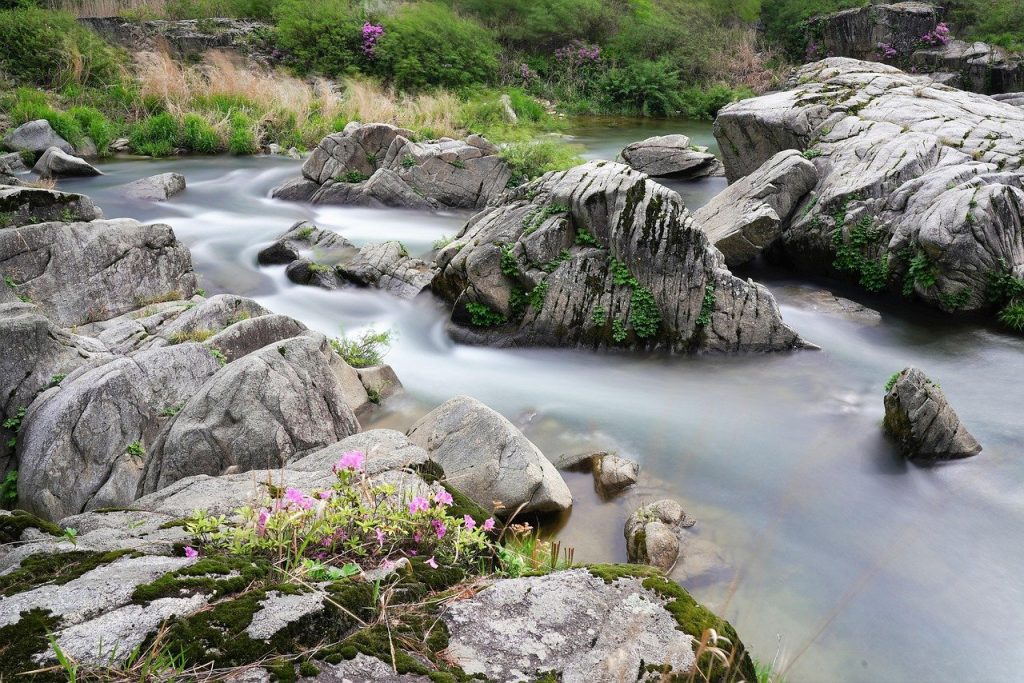
You force life as if you were the cause — but a causeless cause beneath you needs no forcing, yet leaves nothing undone
Watch yourself across a single ordinary day, and you will find one conviction running underneath it all: that you are the one making everything happen. You push the project forward, you keep the relationships together, you force the outcome you want into being. Some part of you is sure that the moment you stopped pushing, it would all grind to a halt — so you rarely stop. You live as the cause of your own life, and it is wearing you out.
There is, however, another possibility — one that runs underneath all that effort. Beneath the self that pushes and forces, there is a cause that needs no pushing at all: a ground that simply is, that you did not make and that supports you without trying. The old name for it is the causeless cause — the source that nothing causes, because everything else arises from it. And when your living flows from there rather than from the straining self, the effort drops out of it, while the living itself goes on.
You spend most of your days as the engine — pushing, forcing, sure the world would stall if you stopped
Look first at the sheer amount of effort that goes into simply keeping it all standing. You wake already braced, running the day's list before your feet touch the floor. You anticipate, you manage, you correct. You carry a low, constant hum of vigilance, because some part of you is sure the world stays standing only while you hold it up — and that if you looked away, it would fall. This is the life of the engine: always on, always pulling the load, never trusted to idle.
And the strange part is that you rarely question it. The effort feels less like a choice than like a law of reality: of course you must push, of course it would all stop the moment you paused, of course it all depends on you. And no wonder: all your life, people rewarded you for being the one who makes things happen — for the ambition, the drive, the refusal to let the ball drop. It is a powerful way to live. It is also exhausting in a way that sleep does not touch, because the engine never truly switches off.
Underneath the strain lies one assumption: that you are the doer, the cause behind every outcome
Trace the strain down far enough and you reach a single assumption propping the whole structure up: that you are the doer. Not merely that you act, but that you are the author of it — the originating cause, the one without whom the deed would not occur. It runs so deep that it rarely surfaces as a thought. It lives instead as a background pressure, the felt sense that reality is yours to operate, and that any slack on your part will show up at once as failure.
But notice what a curious belief this is, the moment you examine it. You did not cause yourself. You did not author the breath you are taking now, or the beating of your heart, or the thoughts that arrive unbidden and announce themselves as yours. Most of what you call your life happens with no management from you at all — and yet you go on believing that the small slice you do manage would collapse the moment you eased off. The doer is real enough as an experience. As the ultimate cause of anything, it does not survive a closer look.
But beneath the doer there is something uncaused that never strives — the ground you already are, call it simply awareness
So look beneath the doer, and ask what remains when the doing stops. It is not nothing — it is something. Sit still for even a moment, let the managing quieten, and you will find that you have not disappeared. Awareness remains: open, present, utterly unforced, and yet unmistakably here. This is what the contemplative traditions keep pointing to under a hundred names — the ground of your being, presence, the aware space in which everything happens. Whatever you call it, it is the part of you that nothing ever caused and that never strives.
And here is its strange quality: nothing that happens within it disturbs it in the slightest. It does not grow tired, because it never lifts anything. It does not strain — it wants nothing. This is the same ever-present awareness that waits behind your eyes right now — the one you cannot lose, because it is what you are. It was here before you learned to push, and it will be here when you finally stop. It is not something you have to achieve or produce — it is the ground you already are, and it has been running your breath and your heartbeat all along, without once consulting the doer.
Rest as that ground, and action does not stop — it begins to flow from stillness, not strain
Now, here is where it turns practical — and where a great deal of spiritual talk goes wrong. You might assume that resting as this ground means going limp: withdrawing from life, letting it all slide, drifting off into a vague serenity while the world burns. Far from it. Resting as the ground is not the end of action — it is a change in where your action comes from.
When you push from the doer, every act carries the weight of the one performing it: the self-consciousness, the inner clench, the anxious monitoring of the result. When the same act flows from the ground instead, that weight is gone. You still do what needs doing — you write the email, you have the hard conversation, you make the call. But the act moves through you rather than out of you, and the part that used to tighten around it has let go. People who live this way often describe it as the work doing itself, and that is not far from the truth.
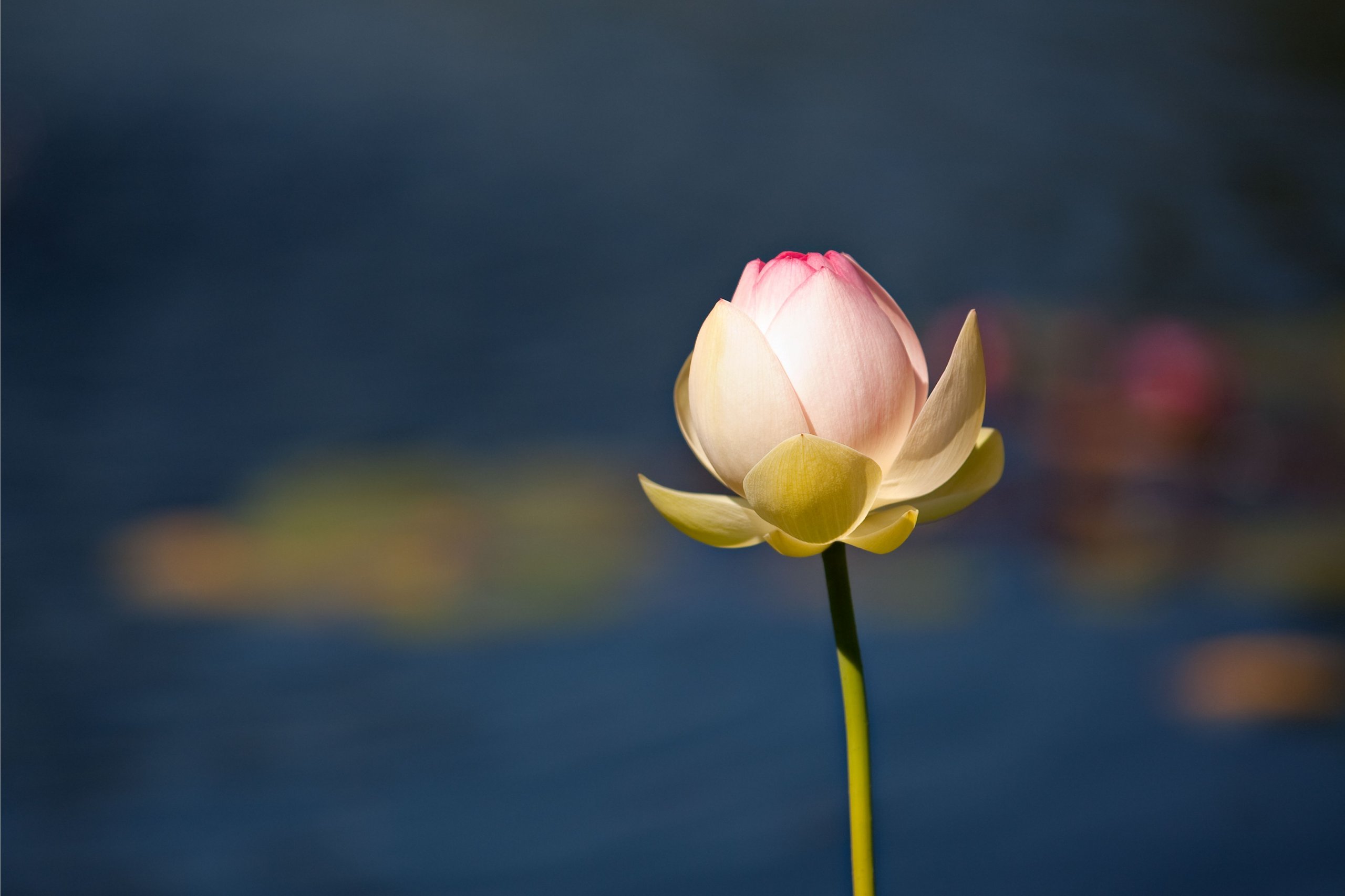
What flows from a causeless source arrives without friction — the way breathing happens, or a flower opens — and nothing forces it
This is the effortless effect, and it is as natural as anything there is — once you stop interfering with it. Look at the rest of reality: it already runs this way. The seed does not strain to become the tree. The wound does not labour to heal. Your own heart has beaten some three billion times without your help, and your lungs breathe you whether you attend to them or not. Effort, it turns out, is not the engine of life. Life runs on something quieter, and the effort is mostly what you add on top, out of the fear that the moment you relaxed, it would all stall.
The Taoists had a precise word for this: wu wei, usually rendered as non-doing — though it never meant doing nothing. It means action without forcing: action so aligned with the moment that it costs you nothing to perform. Lao Tzu put the whole paradox in a single line — that the way does nothing, and yet leaves nothing undone. That is not a licence for passivity. It is a description of what opens up when you stop mistaking strain for effectiveness, and let the deeper current carry the work.
Effortlessness is not idle or magical — you keep acting, often more — but what drops away is the forcing, not the doing
Now I have to guard this hard, because it is the easiest teaching in the world to twist into an excuse. Effortlessness is not idleness. It is not leaning back and waiting for the universe to deliver, not manifesting by refusing to lift a finger, not the spiritual-sounding cover for avoidance it so often becomes. If anything, action from the ground tends to produce more action, not less — only now it comes clean, direct, and free of the inner drag.
What falls away is not the doing but the friction around it — the procrastination, the dread, the endless rehearsal, the part of every task that was never the task itself but only your resistance to it. You can meet what stands in front of you fully and act on it, without adding the second arrow of strain that turns a clean act into an ordeal. Take that friction away, and you do not do less — you do more, it costs you less, and by evening there is something left of you.
So when you notice yourself forcing a result, loosen your grip and let the act arise spontaneously
So what does it actually take to live from the causeless cause, instead of just nodding at the idea? You do not get there by trying — trying is the doer's own move, and you cannot force your way out of forcing. The turn is quieter than that. It begins the instant you notice the strain: the clench in the gut, the shallow breath, the grim determination to make something happen. That noticing is itself the doorway, because the part of you that notices the strain is already standing outside it.
From there, you force less, not more. You let your hands open, you let the breath out, you stop bracing — and you let the next action arise by itself — the word, the step, the decision that wants to come once you are no longer forcing one. At first it will feel as though everything will stall the moment you stop pushing. Try it on something small and see what occurs: the action still comes, often cleaner than the one you would have forced, and it arrives a half-second after you give up trying to produce it.
I still seize the controls as if all depends on me — but I am learning to let go and watch life carry on
I want to be honest about where I stand with all of this, because it is the kind of teaching that sounds best from someone pretending to have mastered it. I have not. I still grab the controls. I still catch myself forcing outcomes that were flowing along fine on their own, still bracing against a collapse that never comes. The doer in me is decades old, and it does not surrender its post easily.
But more and more, I spot the strain a little sooner, and I let go a little earlier, and I watch — half-disbelieving — as the work moves on without me forcing it. That is what I am here to offer you: not a way to manufacture effortlessness, which would be one more thing to force, but a reminder of the ground you already are, where the effort was never required. It is where everything I genuinely offer comes from — and pointing you back to it is my number one duty. You do not have to become the effortless one. You only have to notice that you were never only the doer — and let the causeless cause do what it has always quietly done.