
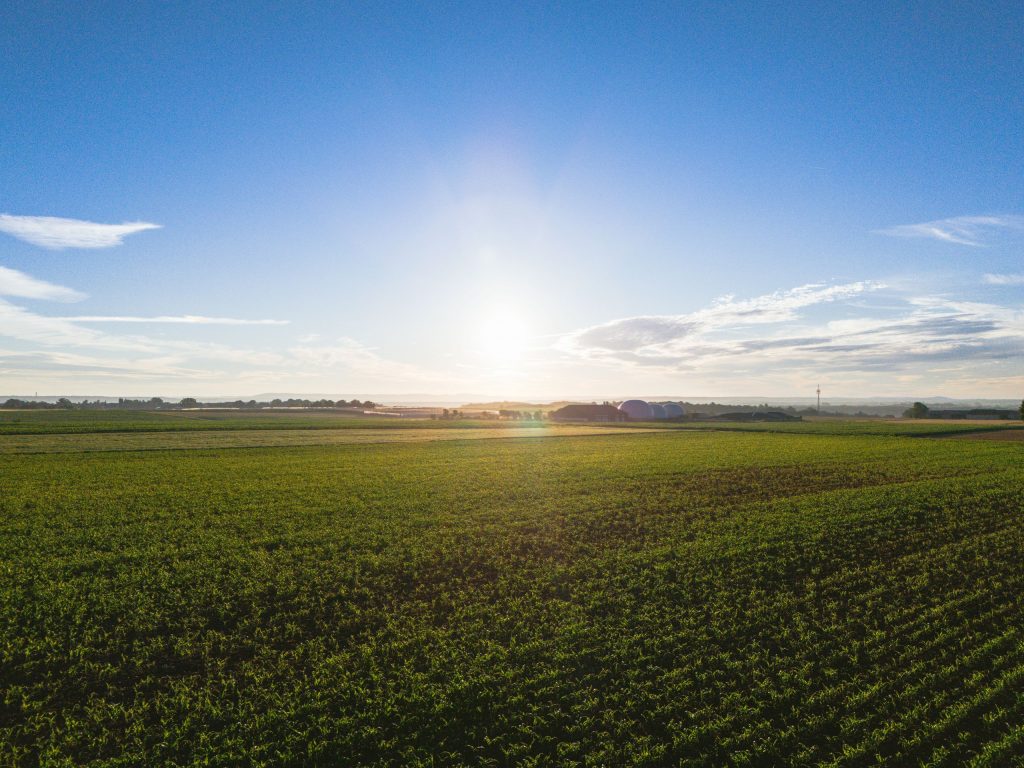
Abundance is not a grade of life that you must earn — it is the very nature of life, and it was yours entirely from the start
Sooner or later, someone offers to sell you "the abundant life." The phrase arrives dressed in many costumes — the preacher's promise, the coach's programme, the influencer's morning routine — and underneath each costume runs the same pitch: the life you currently live is the basic model, and somewhere above it, waiting for those who do the work, there is an upgraded one. And you have believed it far more deeply than you think — not as a stated conviction, but with your calendar, your striving, and the quiet, driving suspicion that the real living has not started yet.
Now, then, I want to set that phrase against the equation in the title, because the equation undoes the pitch in four words. Abundance is not a higher grade of life that effort or mindset unlocks. It is the very nature of life — of the life you are living right now — and it was yours, entirely, from the start. Nobody can sell you what you already are, and nobody can withhold it from you either. The rest of this piece is only the slow unpacking of that single claim.
You chase the abundant life — more money, more experiences, more time — as if the life you live were poor
Look honestly at the shape of your days, and you will find the hunt running through nearly all of them. You want more money, so that the constant low arithmetic of affording can finally go quiet. You want more experiences, so that the album of your life looks properly lived-in — the places, the meals, the moments collected like evidence. You want more time, more love, more recognition — more of whatever your particular hunger has fixed on. The abundant life is always the next acquisition away, and the distance never closes, because as soon as you bank one "more", the next one takes its place.
And listen to what the hunt quietly says about the life you already live: that it is poor. It never says so in words — you would protest the accusation — but it says so in posture. Every reach for the upgraded life is a small vote of no confidence in the present one. You treat your actual days as a waiting room outside the real thing, a draft you keep meaning to revise, an apology for what has not yet arrived. That is the true cost of the pursuit — not the effort it burns, but the standing verdict it passes, day after day, on everything you already have and are.
The pursuit rests on one belief — that life comes in a scarce version and a full one, and yours is the scarce one
Underneath all of it sits one belief, so old and so constant that you have stopped seeing it as a belief at all: that life comes in two versions. There is the scarce version — ordinary, repetitive, never quite enough — and there is the abundant one: radiant, charged, overflowing, the one you glimpse in other people's windows and other people's photographs. And the belief comes with a verdict attached, delivered so early that you never thought to appeal it: yours is the scarce one.
Where did the verdict come from? It certainly did not come from your life itself. It came from comparison — from the curated surfaces of other lives, from advertising whose entire business is the manufacture of felt scarcity, from a culture that cannot sell anything to a person who is not first convinced that something is missing. The scarcity you feel is a sales pitch, repeated for so long that it now sounds like the truth.
But "abundant life" is as redundant as "sunny sun" — abundance is not what life has, it is what life is
But now hold the phrase itself up to the light: "abundant life." It says the same word twice. It is exactly as redundant as "sunny sun" — and the redundancy, once you see it, dismantles the whole two-versions story. The sun cannot be more or less sunny. Shining is not an activity the sun performs on its good days and neglects on its bad ones — shining is what the sun is. A sun that did not shine would be no sun at all.
And life works the same way. Abundance is not a quality life acquires when circumstances improve — abundance is what life is. Aliveness itself is the overflowing: the sheer, unearned pouring-forth of experience, breath after breath, moment after moment, whether the bank balance rises or falls. You can have a difficult life, a painful life, a modest life — but you cannot have a scarce one, any more than there can be a sunless sun. "Abundant life" is not a goal. It is a tautology. Asking for it is asking for what is already, and unavoidably, the case.
When your life feels poor, it's not that its non-extinguishable light has faded — it's rather that your attachments and sprawling calculations are in the way
Which leaves the obvious question, and it deserves a straight answer — one that changes where you direct all your effort. If abundance is the very nature of life, why do your days so often feel pinched, grey, and short of everything? When your life feels poor, it is not that its light has faded — that light does not fade, and nothing you do, fail to do, lose, or suffer can put it out. What has happened is far more ordinary: something stands in the way. Your attachments — the outcomes you clutch, the possessions you guard, the images of yourself you keep servicing — and your sprawling calculations, the endless private bookkeeping of what you have, lack, deserve, and are owed, have crowded into the space between you and your own aliveness.
In other words, the felt poverty is a blockage, not a deficiency. The light in question is the one that has been behind you all along — present through each hour you have ever lived, and dimmed by none of them. You do not need to generate it, improve it, or add to it — no one can add to it, which is precisely why each new acquisition leaves the deeper hunger untouched. The work, if it even deserves that name, runs in the opposite direction from the hunt: not adding but removing — not building a brighter life, but taking down, one by one, whatever you have stacked between yourself and the life that was never dark.
Having more is not being more — abundance is indistinguishable from being, and that is why acquiring more can only make your sense of lack bigger
The clearest map of this confusion that I know of comes from Erich Fromm, the psychoanalyst who spent his career on the question of why modern people feel so empty amid so much. Fromm drew a line between two modes of existence — the having mode and the being mode — and he showed that everything turns on which of the two you live from. In the having mode, you relate to life through possession: you count, you own, you compare, you defend, and you fear every loss as a small death. In the being mode, you relate to life through aliveness itself: presence, relatedness, the unrepeatable now. And the two modes do not add up. No quantity of having ever converts into being — they are different currencies, and there is no exchange desk between them.
This is why acquiring more can only make your sense of lack bigger, never smaller. Every acquisition strengthens the having mode — it confirms, one purchase at a time, that life is a matter of getting — and the having mode is the very posture from which life feels scarce. You are trying to cure the illness with the germ. The man with two houses who wants a third is not twice as close to abundance as the man with one — he is deeper inside the mode that guarantees he will not feel it. Abundance is indistinguishable from being, and being cannot be bought, because it was never for sale — it is what you are before the counting starts.
This is not a manifestation gospel — the abundance meant here is of being, not of finances
Let me be equally clear about what I am not saying, because this teaching has a corrupt twin, and people confuse the two daily. I am not preaching a manifestation gospel. I am not telling you that the universe rewards the right mindset with money, that visualising plenty pays invoices, or that your empty account is secretly a spiritual report card. Genuine material need is genuine — bills are real, poverty is real and crushing, and no amount of reframing feeds a family. Anyone who tells a struggling person that their scarcity is merely a thought defect has not understood abundance — they have monetised it.
The claim here is at once more modest and more radical: the abundance meant is of being, not of finances. Money answers money problems — earn it, manage it, take it seriously. But the restlessness that keeps gnawing at you once you have answered the money problems — the sense of lack that survives every raise, every purchase, every upgrade — that one was never a money problem, and money will keep failing to answer it, at any amount. That hunger is asking for being. Feed it the right food, and even a modest life starts tasting like plenty — feed it acquisitions, and even a fortune keeps tasting like famine.
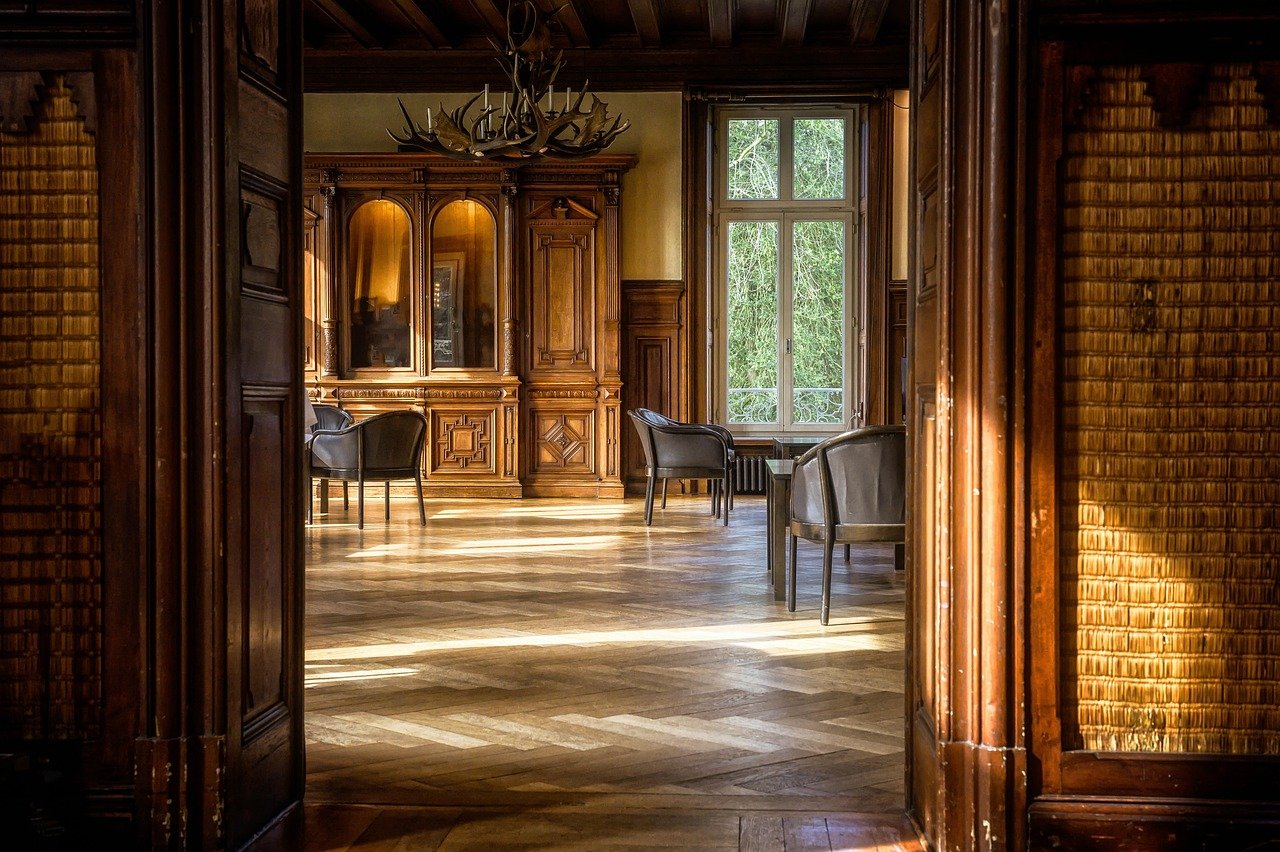
Pause for one honest moment, drop the bean counting, and notice the aliveness that is here no matter what
So here is the practice, and it costs nothing — fitting, for a teaching about what cannot be bought. Pause, now if you like, and for one honest moment drop the bean counting: the tallying of what you have against what you lack, the comparing, the forecasting, the perpetual private arithmetic. Set it down for a single breath. And then notice what remains when the counting stops — the aliveness that is here no matter what. Light keeps reaching your eyes. Sounds keep arriving without an invitation. Breath keeps entering and leaving on its own schedule. Underneath all your problems, existence itself keeps pouring in, unmetered and unbilled.
That pouring is not your doing, and that is exactly the point. The aliveness you just noticed runs entirely on its own — the causeless cause has been carrying it, effortlessly, without a single contribution from you. You cannot take credit for it, and — here is the liberation — you cannot run it dry either. The counting will resume a minute later, and that is fine. But you will have tasted, however briefly, the difference between the two currencies: the wealth that needs guarding, and the wealth that asks only for your attention. Do this once a day, badly, and the pitch about the upgraded life quietly starts losing its customer.
Some days I notice that the sense of scarcity still runs the show — but, then, I look up, and the sun, unimpressed, shines on
I will not pretend to write this from some permanent noon. Some days I notice that the sense of scarcity still runs the show — I wake up counting, I compare my life to lives I have not lived, I catch the old hunger scanning the horizon for the next acquisition that will finally settle the account. The pitch is decades deep in me too.
But, then, I look up — sometimes literally — and the sun, unimpressed by my accounting, shines on. It shone through every year I spent hunting, and it did not once wait for me to deserve it. That is what I keep returning to, and it is honestly all I have: not a settled abundance I could hand you, but the remembering — again and again, as many times as it takes. The reminding is what all my work finally comes down to — pointing at what was never missing in the first place. Your life is not the scarce version. There is no scarce version. There is only the one life, sunny the way the sun is sunny — and it has been yours, all of it, all along.
An old Italian song says all of this better than I ever could. Verse after verse, it runs through every human lot — who wins, who loses, who sweats, who dreams — and, after each round, it returns to the same refrain: "ma il cielo è sempre più blu" — but the sky is always bluer.