
What "Forerunner" names — and what kind of spiritual teacher this is
For a long time I did not have a word for what I do. Teacher was wrong — it had more than what I could honestly hold. Coach was wrong — it pointed at a domain I am not in. Mentor was closer but still implied an arrival I do not have. None of the standard names fit.
Then a friend, a classics scholar, used the Greek word Prodromos about my work. The word stopped me.
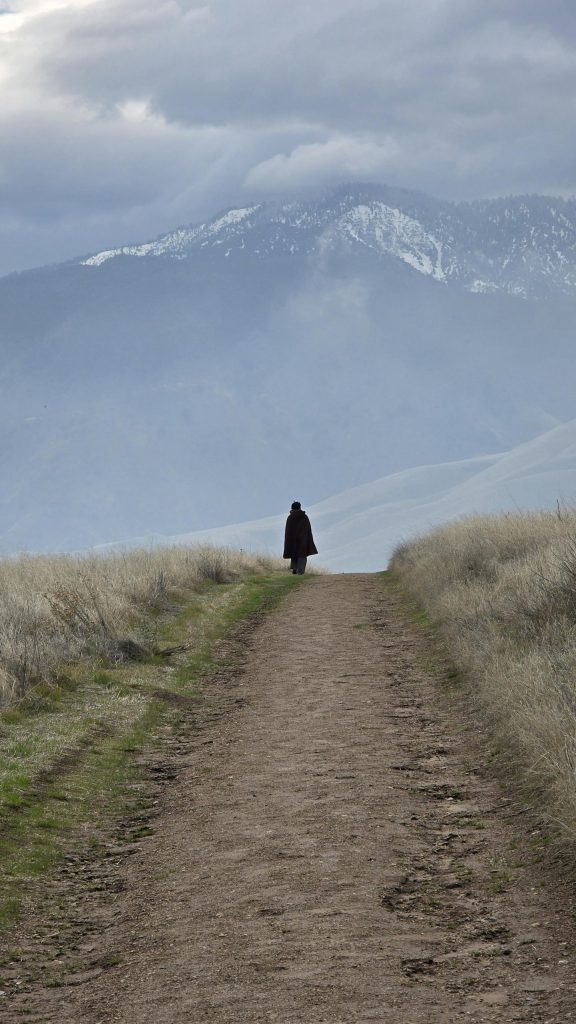
Prodromos — "the one who runs before." Not the one who arrives. Not the one who knows where the road ends. The one who walks ahead, slightly, on the same path the others are walking. The forerunner that everyone else on the same trail with him can clearly see them and either follow them or call upon them to hold on and, if need be, revise their common path ahead.
I sat with the word for weeks. When I came back to it I noticed something: the word names what I have been doing all along, in this work — and what I had been ashamed of doing and being. The word gave me permission to stop pretending otherwise.
Why I needed a Greek word for what I do
The English words come pre-loaded. Guru carries Indian-spiritual marketplace and the implied arrival of the teacher. Master carries craft tradition and the implied finished mastery. Coach and consultant carry transactional service. Mentorcarries career advancement. Each English word arrived already shaped by what people sell with it.
I needed a word that had not been worn yet.
Greek has the advantage of distance. Prodromos in English ears is not a product category. It does not carry the spiritual-marketplace residue. It also carries — for those who hear the etymology — a specific structural meaning: one who runs before, who has not yet arrived where the others are going. The word's literal sense is the position's literal sense. There is no slippage between what it means and what I mean.
(And I notice: choosing a Greek word could itself become a kind of pose — the educated teacher who reaches for the foreign term. I am suspicious of myself for the choice. I have not found a better one.)
Read me — and notice what the reading is doing to you
You can read me. That is the first verb, and the simplest. The books are on the shelf. The essays are online. The sentences sit where I left them.
But notice what the reading is doing to you. Not what the reading is teaching you. What it is doing.
If the reading is making you feel that, finally, here is the teacher who has the answers — the reading has misfired. I do not have answers in the way you might be looking for. The sentences are not arrival-claims dressed as observations. If you find arrival-claims in them, that is your projection meeting my language at an angle.
If the reading is making you slow down — making you notice that you are reading more carefully than you read most things, that you are turning a sentence over to see its other side — then the reading is doing what reading me actually does. (Which is to say: not very much, in the conventional sense. But something specific.)
Hear me — and notice that the hearing is the work, not what comes after
You can hear me. The videos exist. The interviews exist. The conversations, if we have one, will happen.
What I want to mark here is the hearing itself — not the action that might follow.
Most teaching trains the listener to wait for the application. The sentence is a delivery vehicle; the value is what the listener does after. That is the productivity register. I told you what to do. Did you do it?
Hearing me is different in this specific way: the hearing is the work. There is no application that completes it. There is no day on which you will look back and say to yourself: yesterday he spoke to me — and today I applied exactly what I heard him say. The hearing itself is the position being transmitted. The position is not a tool you take away from the hearing. The position is what is happening while the hearing is happening.
When the hearing ends, the position ends. Then you have to hear again. Or read. Or follow. The transmission requires the contact to be live.
Follow me — but watch where the following takes you
You can follow me. Subscribe, attend, walk with me in the literal sense if circumstances allow. The following is a real act.
But watch where the following takes you. Not to me — that is the structural impossibility I will name in a moment. Watch where the following takes you. Especially the blind following.
A teacher who is arrived offers a destination: follow me to where I am. A Forerunner offers no such destination. There is no where I am to follow to. There is only the walking. So when you follow me, you do not arrive at me. You arrive somewhere on your own walk — somewhere you would not have arrived without the following, but somewhere that is yours, not mine.
This is what good teachers have always known but rarely named clearly. The follower's destination is never the teacher. The teacher is the catalyst, the angle of approach. The destination, if it is anywhere, is in the follower's own walk. (I wrote, in another note, about which teachers I can still follow now — and the kind of teaching I have stopped being able to receive.)

Why you cannot catch me — and why the not-catching is the point
Here is the line that requires the most care. You cannot catch me.
It does not mean I am faster than you. It does not mean I am smarter than you. It does not mean I am ahead in the way a champion is ahead of a competitor in a race. None of those readings is correct, and all of them are the readings the line will invite if you read it quickly.
The line means this: there is no place to catch me to. I have not arrived anywhere. The walking is the position. The walking is what I do. The walking is what we are doing, both of us, when the transmission is live. To catch me would mean reaching a place where I am no longer walking — and that place does not exist. The Forerunner is structurally uncatchable because there is no destination to stop at.
The not-catching is the point. The walking continues. (And the same is true of you. Your walking continues.)
What this asks of the follower
If you cannot catch me, the structure of following is different from what most teachers offer. What it asks of you is different too.
It asks that you stop measuring progress by closeness to the teacher. Most teaching invites you to track how close you are getting to where the teacher is. Am I more like her this year than last year? Am I closer to his level? That measurement is incoherent here. There is no level. There is no place to be getting closer to.
What replaces the measurement is — and I notice this is harder to name — a sense of direction. You are still walking. The walking has direction. The direction has something to do with what is being transmitted in the reading, the hearing, the following. But the direction is not toward me. The direction is into your own walk, sharper than it was, more your own than it was.
What this costs the Forerunner
The Forerunner position is not a privileged position. It costs something to occupy it. I want to name that here, because if I do not, the whole structure can be read as a cleverer way of claiming the same authority I am refusing to claim.
What it costs: the comforts of arrival. The Forerunner does not get to look back on the walking as completed work. There is no point at which the inquiry resolves, no point at which the dysarthria stops revising every third word, no point at which I can say I have figured this out. The condition is permanent. The walking continues whether I want it to or not.
It also costs the comforts of authority. A teacher who has arrived can speak with the weight of having gotten there. A Forerunner cannot. Every sentence I write has to carry its own weight in real time — no biographical I made it through, so this works can prop it up. I have not made it through. I am still inside it. The sentences come from inside, or they do not come at all.
This is, in some honest accounting, not an easier position. It is just a more truthful one.
The walking that has no end — and what that opens up
The walking has no end. This is the structural fact, and it does not resolve at the close. There is no final paragraph that delivers the destination. There cannot be.
What is being offered is the company of the walking itself. The reading, the hearing, the following — these are forms of company. The Forerunner walks. The follower walks. The walking is shared without being the same walking. (Like Michael Ende's Neverending Story, which I have started three times and finished none — the inquiry has no last page where the book closes and you put it down. The pages keep opening.)
What this opens up is something the arrival-frame foreclosed: the right to keep walking as a real life, not as a phase to get through. Not-arrived stops being a deficiency you are waiting to outgrow. It becomes the position you live from. I have written about this position more carefully elsewhere — but this is the short version: the walking is not a punishment. It is the only honest place a teacher I trust would invite me to stand.
(And I notice — even as I write this — that the sentence has just done the very thing it claims to refuse. It has invited you somewhere. I notice the invitation, and I notice I do not see a way to avoid making it.)