
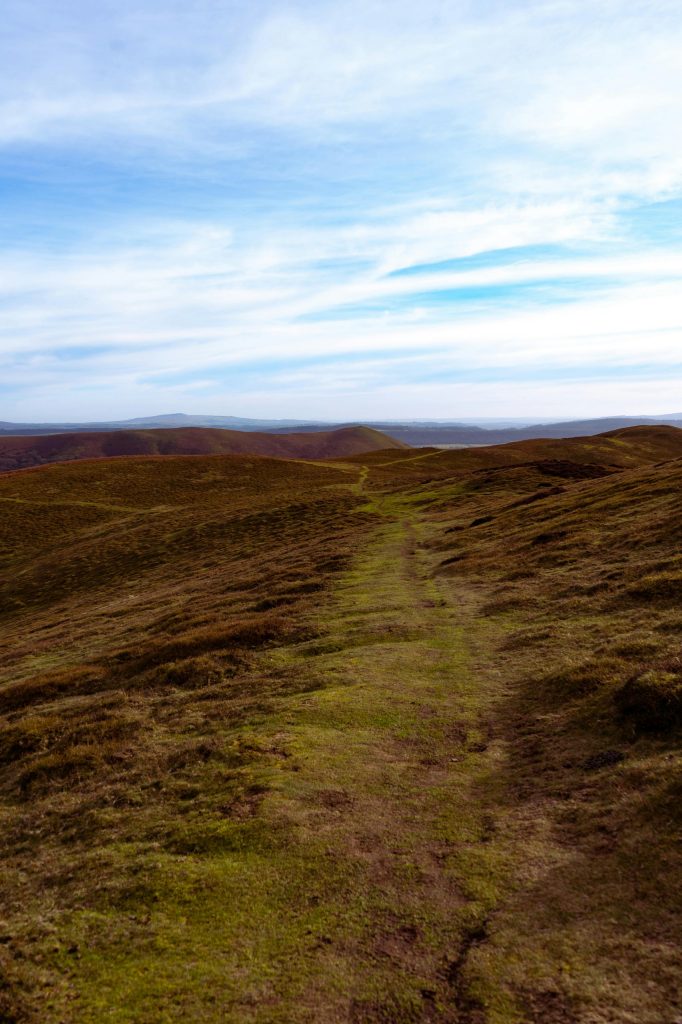
What it means that no method can free you — and why you can only make your own way by walking it
I want to start with the thing I spent thirty years looking for, because I no longer believe it exists. The method. The right practice, the right teacher, the right sequence of steps that, once found and followed correctly, would finally free me.
(I notice, writing that, a small clench somewhere below the sternum — the old hope, still there, still hoping I am wrong about this.)
What I have come to see is harder and lighter at once. There is no method that will free you, because the freedom you are looking for is not at the end of a path someone else has mapped. There is only the way you make — and walk — yourself. And no one, including me, can hand you that.
The promise we are all sold: that the right "how" will finally be the one that frees you
Now, then, the promise is everywhere, and it is seductive precisely because it is so reasonable. Everything else in life yields to method. You want to build muscle, there is a programme. You want to learn the language, there is a course. So surely — the reasoning goes — freedom, too, has its method. You simply have not found the right one yet.
So you look. A tradition, then another. A teacher, a modality, a practice with its sequence of stages. Each one arrives carrying the same quiet promise: this is the "how" that the others were missing.
And for a while, each one seems to deliver. There is movement, relief, the felt sense of progress along a track. The track is real. But notice what the track requires of you — that you keep tracing someone else's map, and measure your freedom by how faithfully you follow it. The promise was freedom. The mechanism is obedience.
Why every "how" becomes another cage — the method that promised freedom, now the thing you serv
Here is the turn that took me longest to see. Every method, however liberating at first, becomes over time the very thing it promised to free you from.
It happens like this. The practice that opened something becomes the practice you must maintain. The teaching that loosened a knot becomes the doctrine you must not betray. The harder you work at the method, the more you confirm to yourself that freedom lives inside it — and the more its grip tightens, exactly as fighting your own resistance keeps the resistance in place. The "how" that was a door becomes a room you cannot leave.
This is not a flaw in any particular method. It is what method is. A method is a set of instructions for arriving somewhere — and the freedom you are looking for is not somewhere you arrive. It is not a location the instructions can reach.
So the more methods you try, the more cages you build — each one entered as an escape from the last.
U.G. Krishnamurti, who spent decades refusing every method anyone tried to hand him
There is no how, there is no why — and there is no separate you waiting to be freed
This being said, there is a deeper turn underneath the one about method, and it is the one that actually does the work.
Look closely at the sentence "I want to free myself." It contains two parties — the self that will be freed, and the self that will do the freeing. The whole search for a method runs on that split. There is a trapped you, and a future liberated you, and the method is the bridge between them.
But when you look for the trapped self — really look, not think about it but look — you do not find it. There is no how, there is no why, there is only YOU. There is no separate self standing inside the cage, waiting for the right method to unlock the door — there is only the looking itself, which I have written about as the thing that was doing all the searching all along. The one who would be freed, and the one who would do the freeing, were never two.
(This is the part that tends to register lower than thought — in the breath, which lets out a little, before the mind has agreed to anything.)
Why "no method" is not "nothing to do" — and cannot itself be turned into a method
And yet — I can hear how this could go wrong, because it went wrong in me for years. If there is no method, the mind reasons, then I will adopt no-method as my method. I will practise not-practising. I will make a discipline of having no discipline.
But notice what just happened. The search reconstituted itself one level up. "No method" became a new "how," with its own subtle obedience — am I doing my not-doing correctly? — and the cage rebuilt itself out of the very material that was supposed to dissolve it.
So let me be exact, because the distinction is everything. "No method can free you" does not mean do nothing. It does not mean drift, or go slack, or wait. There is still walking to be done — a great deal of it. What there is not, is a map for it. The movement is real; the method for it is the fiction.
You do not get to stop moving. You only get to stop pretending someone else's map is the territory.
For the one who has tried every method and quietly concluded the failure must be theirs
Now I want to speak to one person directly, because I know this one well. (You may not be him. If you are not, the rest still holds.)
You have tried many methods. Really tried — not dabbled, but committed, moved through the stages, done the work. And each one, eventually, stopped delivering. And somewhere in you, in the gut where these verdicts live, a conclusion has been forming: that the methods work, and the broken thing is you. That everyone else found the "how" and you, specifically, are the one who keeps failing it.
I want to take that conclusion in my hands and turn it over, because it has the fact backwards. The methods did not work and reveal your failure. The methods lost their grip because that is what methods do — and your refusal to settle inside any of them was not failure. It was the most honest thing about you. You kept moving because no map was the territory, and some part of you knew it before you could say it.
You did not fail the methods. You kept moving, and the methods did not.
What this asks of you — not a better method, but a bridge built step by step as you walk it
So what does this ask, if not a better "how"?
It asks something stranger, and it cannot be turned into an instruction without becoming the very thing it refuses. The nearest I can put it is this. The bridge is built step-by-step, in real (and in no,) time, as you walk it. There is no completed bridge waiting for you to find it. There is no architect's drawing you were supposed to have followed. There is the next step, made by you, falling on ground that did not exist until your foot came down.
This is not as comforting as a method, and I will not pretend otherwise. A method tells you the steps in advance. This tells you there are no steps in advance — only the ones you make. The way does not pre-exist your making of it. You make it, and you walk it, and the making and the walking are one act.
That is what the headline means, all the way down. Not find your way, as though it were hidden and waiting. Make it. And walk it. Yourself.
Why this is not abandonment — and the strange steadiness of moving with the gaping hole exposed
can hear the last objection, because I have made it myself, usually at three in the morning. If there is no method and no map and no one who can hand me the way — then I am alone with this. Abandoned to it.
But notice, again, who is speaking. The one who feels abandoned is the one who still wants the map, still believes there was supposed to be a "how," and reads its absence as a door slammed shut. And I will not stand over you and call that feeling false. The wanting is real. The three-in-the-morning is real. I am there often enough myself.
What I have found, though — not as a method, just as a fact I keep stumbling back into — is that moving without the map is not abandonment. It is the end of a particular waiting. Just move ahead, moment to moment, with your gaping hole — which is your true power — exposed. The hole you kept trying to fill with the right method turns out to be the opening you walk from.
And I am not ahead of you in this. I walk along the path the same way, the same step-at-a-time, the same exposed. Elsewhere I have set down what this looks like when we work together — not a method I will teach you, but company for making your own way and walking it. There is no way to free yourself. There is only the way you make, and walk, and are.