
Your pain is real, and awakening is not causing it
If you are asking whether spiritual awakening is painful, something in your life probably hurts. Perhaps you have not slept properly for weeks. Perhaps a loss has emptied your days. Or your old life has stopped making sense, and nobody around you seems to notice. Somewhere along the way, someone told you that this is what awakening feels like. Maybe you even felt relieved, because at least your pain now had a meaning.
So here is my answer first. Is spiritual awakening painful? No. What you feel is real, and it deserves your attention. Awakening, however, is not what is causing it.
What hurts you comes from two places. The first is your life, with its losses and its fears. The second is quieter, and your search itself brings it: waiting. You are waiting for awakening to happen, and waiting like that hurts more than anyone tells you. The second one, at least, you can stop today.
Almost everyone says awakening has to hurt
Ask the question online, and the same answers keep coming back. Awakening, you read, is the death of the ego, and dying hurts. Old pain rises from wherever you buried it. The dark night of the soul comes first, and the light only after it. One phrase turns up again and again: awakening breaks you before it heals you. You may have read it so often that it now feels like a fact.
Some of these answers describe real experiences. People do live through nights when nothing makes sense any more. I take those nights seriously, and I am not asking you to dismiss yours.
Yet all of these answers share one assumption. Your pain, they say, is the price of something. Each bad week brings you a little closer to a reward that is still to come. Your suffering gets a purpose, but that purpose always lies in the future.
Treating suffering as progress keeps you in it longer
That assumption has a cost, and you pay it in time. If pain means progress, then putting up with it makes sense, and you stop asking what is actually wrong. Your exhaustion becomes part of the process. Your loneliness becomes a sign that you are outgrowing people. Your anxiety becomes proof that something big is coming. Every symptom finds a place in the story you have been told.
Then feeling better turns into a problem of its own. A good week makes you uneasy. Have you gone backwards? Has the process stalled? You begin to distrust relief, which is a strange thing for anyone in pain to learn.
Meanwhile, the story protects itself. If you suffer, the process is working. If your suffering stops, you must have left the path. Either way, this story cannot be wrong. You can stay in pain for years, while nobody asks whether it ever needed to last that long.
What hurts you deserves care, not a spiritual explanation
So set that story aside for a moment. Look at your pain as it is. What is it, actually? It may be grief for someone you have lost. It may be the end of a marriage or a job. It may be exhaustion after years of carrying too much. It may be anxiety, or a depression that has grown slowly. Each of these has a name, and each one calls for its own kind of care.
Care does not mean healing first and living later. It means treating your pain as what it is, today. You rest when you are worn out. You call a friend when you are alone. You see a doctor when your body or mind is struggling.
Has your pain taken over your days? Does that frighten you? If either is true, please see a doctor or a mental health specialist before you look for anyone else. If you ever think of harming yourself, call your local emergency services straight away. That is the first care your pain deserves, and it comes before every explanation, mine included.
Waiting for awakening puts your life on hold
There is one pain, though, that does belong to your search. Once you believe that awakening is coming, today becomes the day before it. Your mornings and your evenings become time to get through. Your real life, you feel, will start later. Until then, you are only passing the time.
That is the real reason awakening feels so hard. Waiting is hard, and waiting for years is harder still. In 2023 I wrote a book called 102 Companions, and a line in it shows why: "Bliss shrinks time, misery expands it." Waiting is misery of exactly that kind. One afternoon of it can feel longer than a week of living.
While you wait, you keep checking yourself. Am I any closer? Is something supposed to be happening by now? Every sign of awakening you tick off describes the one who waits for it. The life you are actually living, all this time, goes by unattended.
Kafka described a man waiting years at an open door
Franz Kafka put this pain into a single story. Near the end of The Trial, a priest tells this story to K., the novel's main character, as a parable. (Kafka first published it on its own, in 1915, as "Before the Law".)
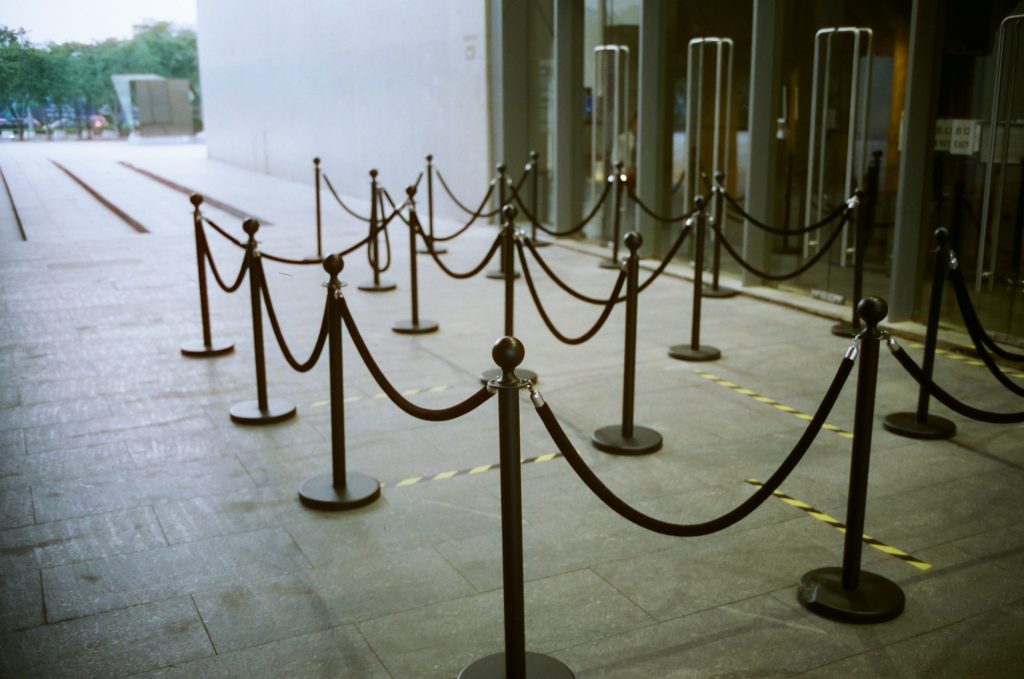
A man from the countryside comes to a door. He asks to go in, and the doorkeeper refuses. Will the doorkeeper let him in later? In David Wyllie's translation, the answer is: "That's possible, but not now." And yet the gateway, Kafka says, "is open as it always is".
The man studies the doorkeeper's fur coat and long beard. Then he "decides it's better to wait until he has permission to enter". The doorkeeper gives him a stool, and he "sits there for days and years".
In The Trial, one of my ten favourite books, the parable takes a few minutes to read. From its first line to its last, nobody hurts the man. He simply waits, until waiting becomes his whole life.
Kafka's doorkeeper takes every bribe and still says not now
The man is busy while he waits. He asks to be let in, time and again. He answers the doorkeeper's questions about where he comes from. The man came well equipped for his journey, and he hands over everything he has, however valuable, to get in. The doorkeeper accepts it all, and each time he explains why: "I'll only accept this so that you don't think there's anything you've failed to do."
You may know the worry in that sentence from your own life. Think of a retreat, a course, a new teacher. Think of a practice you do every single morning. Each can become a payment you make to get in. Practice can be good for you. Paying with it is what hurts, because the answer stays the same. Year after year, the doorkeeper still won't let the man in. In his old age, the man even asks the fleas in the doorkeeper's fur collar to plead his case.

A door made only for you was never locked
Look again at what keeps the man outside. The doorkeeper steps aside. In fact, he laughs and invites him to try. "Try and go in," he says, "even though I say you can't."
All he adds is a warning about more doorkeepers further in. The gateway stays open throughout the man's life. What keeps him out is two words, "not now" — better, the fact that he believes them.
Just before he dies, the man asks one last question. Why has nobody else ever come here? The doorkeeper has to shout, because the man's hearing has faded: "This entrance was meant only for you. Now I'll go and close it."
I read the ending this way. Only the man could have let himself in, because the door was his from the start. In the same way, no teacher — and I am one myself — can let you into what you already are. You have been inside it the whole time you were waiting.
Awareness does not wait, because it is always here
Now leave Kafka's man at his door. Look at this moment. Waiting needs a future. It also needs someone who has to get ready for that future. Try to find either of them in your awareness itself. You will find thoughts about waiting. "Will it be this year?" "Why is it taking so long?" Yet the awareness they appear in waits for nothing. It is simply here, as it has been in every moment of your life. You can check this right now, with nothing but your attention.
Your pain appears in awareness too. So does your hope, and so does every doubt about yourself. Each of them keeps its own pace, and awareness asks none of them to hurry.
You cannot have what you are, and for the same reason you cannot wait for it. What you are has been here through every year you spent waiting.
After my stroke, I learned what waiting costs
I know the pain of waiting from my own life. In 2024 I had a stroke, and it changed the way I speak. Before the stroke, I sang in two choirs. Now I cannot sing any more. For a while afterwards, I put my life on hold. I was telling myself, rather convincingly, that writing could wait until my voice was steadier, and talking to people until my sentences came out whole.
By the second year, I saw what all this waiting cost. The stroke itself was over in one summer, but my waiting had already taken more than a year of my life. So I stopped waiting, even though nothing had healed.
I had waited for awakening in the same way, for twenty-five years. I treated it as an event somewhere ahead of me, and every bright state that faded felt like my own failure. With awakening, too, the change came when I turned round. I stopped looking ahead, and looked at whoever was waiting.
I can keep you company without making you wait
A teacher can turn into a doorkeeper without meaning to. "Come back after the next retreat." "Do the advanced course first." "You will be ready in a year or two." Each of those sentences is Kafka's "not now", said in a kinder voice. And each one keeps you on the doorkeeper's stool a little longer.
I have no door to guard. I spent those twenty-five years on that stool myself, and I know what it feels like after the first year, and after the tenth. That is why I am never too far ahead of you to feel distant.
Pain is easier to bear in company. Unlike awakening, company is something one human being can really give another. It can start today, with your life and your pain exactly as they are.
You never had to wait for spiritual awakening
So, is spiritual awakening painful? Your pain is real, and it deserves care for what it actually is. Grief needs grieving, and exhaustion needs rest. Awakening is not what hurts you. The awareness that the word points to was here before your pain began. It is here now, even while you hurt.
Waiting is the one pain your search adds to your life, and that pain you can stop today. Please do not take my word for it. Ask yourself, right now, whether you are aware. You are, and you have been all along.
Kafka's man waited his whole life at a door that was his from the start. Your awareness was never behind a door at all. That is why you never had to wait for spiritual awakening.