
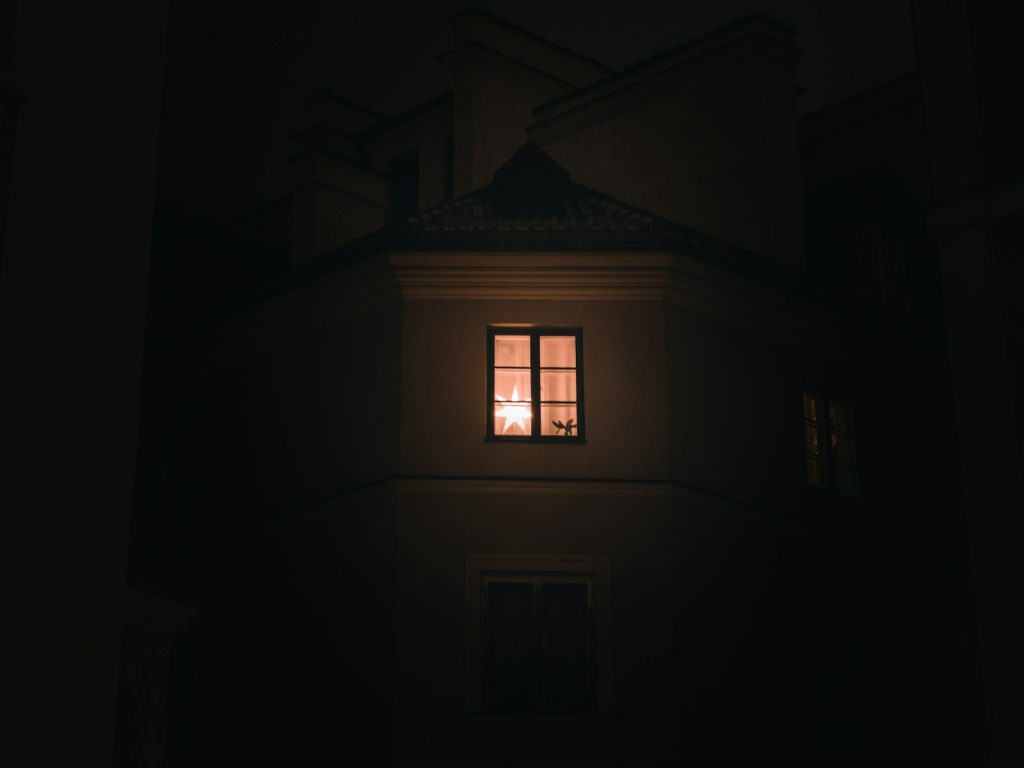
Does awakening come before the dark night, or after it?
Ask Google about spiritual awakening and the dark night of the soul, and its suggestions keep returning to three questions. Does the dark night come before spiritual awakening? Does it come after? Is it one of the symptoms of awakening? Among those suggestions is a quieter one, from people who wake at 2am every night and wonder whether there is a spiritual reason. Behind all these questions, then, there is often a person who cannot sleep and wants to know when the night will end.
The phrase "dark night of the soul" is old. It comes from John of the Cross, a Spanish friar and poet of the sixteenth century, who wrote of a night in which all that comforts a believer goes dark. Today the phrase names any long stretch of time when what used to give life its meaning stops working.
Which comes first, the night or the awakening? Spiritual awakening is here, in the night itself, rather than at either end of it. To see why, begin with the answer most pages give.
Most articles online say awakening waits until your suffering ends
Most of the pages that a search brings up for these questions tell the same story in three acts. It opens with a crisis — your identity and your sense of meaning fall apart. A breakthrough follows, and the story closes on a new life, which may look much like the old one from outside, yet feels entirely different within.
In each version, awakening lies where the night ends, like a dawn you have to earn. And so, week after week, one question grows louder: am I nearly through?
For many people the night lifts in time (sooner for some, later for others), and I would never take that hope from anyone. What I question is the idea that awakening waits until the night has lifted. Believe that long enough, and you will endure almost anything for the dawn's sake. Pain taken for progress tends to last longer than it needs to.
There is a second way to read the night, and it turns on a single word.
Psychiatrist Gerald May called the dark night obscure, not evil
The word is "dark", and my guide to it is Gerald May (1940–2005). He practised medicine and psychiatry for a quarter of a century, then became a senior fellow in contemplative theology and psychology at the Shalem Institute for Spiritual Formation, in Bethesda, Maryland. Shortly before his death, he devoted a whole book to the dark night. It first appeared in 2004 as The Dark Night of the Soul, subtitled A Psychiatrist Explores the Connection Between Darkness and Spiritual Growth.
In the book, May points out that the Spanish word John chose for dark, oscura, "simply means 'obscure'". John, he writes, was describing "something mysterious and unknown, but by no means sinister or evil." Just as you can see little at night, what unfolds in a dark night is hidden — even from the person it happens to.
This leads May to a line he admits is "flippant": "If you're certain you're going through a dark night of the soul, you probably aren't!" In his experience, people in the middle of one almost always take it for something else. When it is pleasant, they may call it "a mysterious breakthrough, a moment of unexplainable grace." When it is unpleasant, he adds, "they tend to see it as a failure on their part."
So a dark night is a poor symptom to go by, since you cannot even be sure you are having one. Each sign you measure yourself by points straight back at you.
A doctor can check whether depression is part of it
A trained eye, though, can make out some of what weighs on you during a dark night. May, the psychiatrist, discusses depression and the dark night side by side. "My experience," he writes, "is that people often experience depression and the dark night at the same time." Since the two "so often coexist", his advice is "simply to identify depression where it exists and to treat it appropriately."
This concern goes back centuries. John of the Cross himself, May explains, wanted people who suffered from melancholia (the old word for depression) to "be accurately diagnosed and receive the treatment they needed."
In the same spirit, whatever you call what you are living with, please let a doctor check for depression. Has your mood been low for weeks? Have your sleep, your appetite or your interest in everything changed? Then book an appointment, and tell the doctor what you feel, as best you can. A counsellor or a psychologist can help as well.
If you ever find yourself thinking about ending your life, please speak to someone now — a friend, a doctor, or a free helpline: 116 123 (UK and Ireland), 988 (US and Canada), 13 11 14 (Australia). If you ever think of harming yourself, call your local emergency services straight away: 999 or 112 (UK and Ireland), 911 (US and Canada), 000 (Australia).
Caring for your health takes nothing away from the meaning of your night.
However long the night, you know that you are aware
So many of the searches come down to one question: how long does the dark night last? The process, May observes, "is always obscure", and "one does not recognize what is going on." A night that keeps its own workings out of view gives no hint of when it will end.
Yet one thing in the night is not obscure at all. On a moonless night your own hand in front of you disappears, and you know, without seeing anything, that it is dark. Darkness, too, is something you are aware of.
You know that you are aware, whether your night is a few days old or has gone on for years, and you know it fully, here and now.
On a separate page, I describe the dark night of the soul in more detail, together with five things to try during it. The fifth asks for one quiet minute a day.
You can realise your true nature in the dark
May goes further than naming the night obscure. John of the Cross, he notes, describes the dark night as "happy", "glad", "guiding" and full of "absolute grace". In May's reading, the night is "the secret way" in which God "brings us to the realization of our true nature."
May writes as a Christian (for him, God is the one at work in the night), and you can follow him without sharing his faith. In his account, the night itself is the way there.
And the way need not hurt: some dark-night experiences, he says, "may be quite pleasant". For May, a night is dark because it is hidden, and some of what it hides is good. He tells of a friend, driven all his adult life by perfectionism, who gradually and inexplicably began to relax, until he felt "free just to be".
Your true nature, then, is no prize waiting beyond the dark. It is you — aware of this sentence as you read it. Being who you truly are is the most familiar feeling there is, even in the dark. To realise your true nature is to notice it, here, without waiting for any dawn.
At fourteen, the world seemed to move away from me
I have known this kind of darkness myself. At fourteen, for months on end, the world seemed to move away from me, as if a filter stood between it and my eyes.
Look again at that sentence, and at two small phrases in it: "from me" and "my eyes". Far away as the world seemed, there was someone for it to move away from — and that someone also saw the filter.
A filter can dull everything you see. It cannot dull your awareness of the filter.
Whoever is aware of a filter is as present behind it as on any bright day.
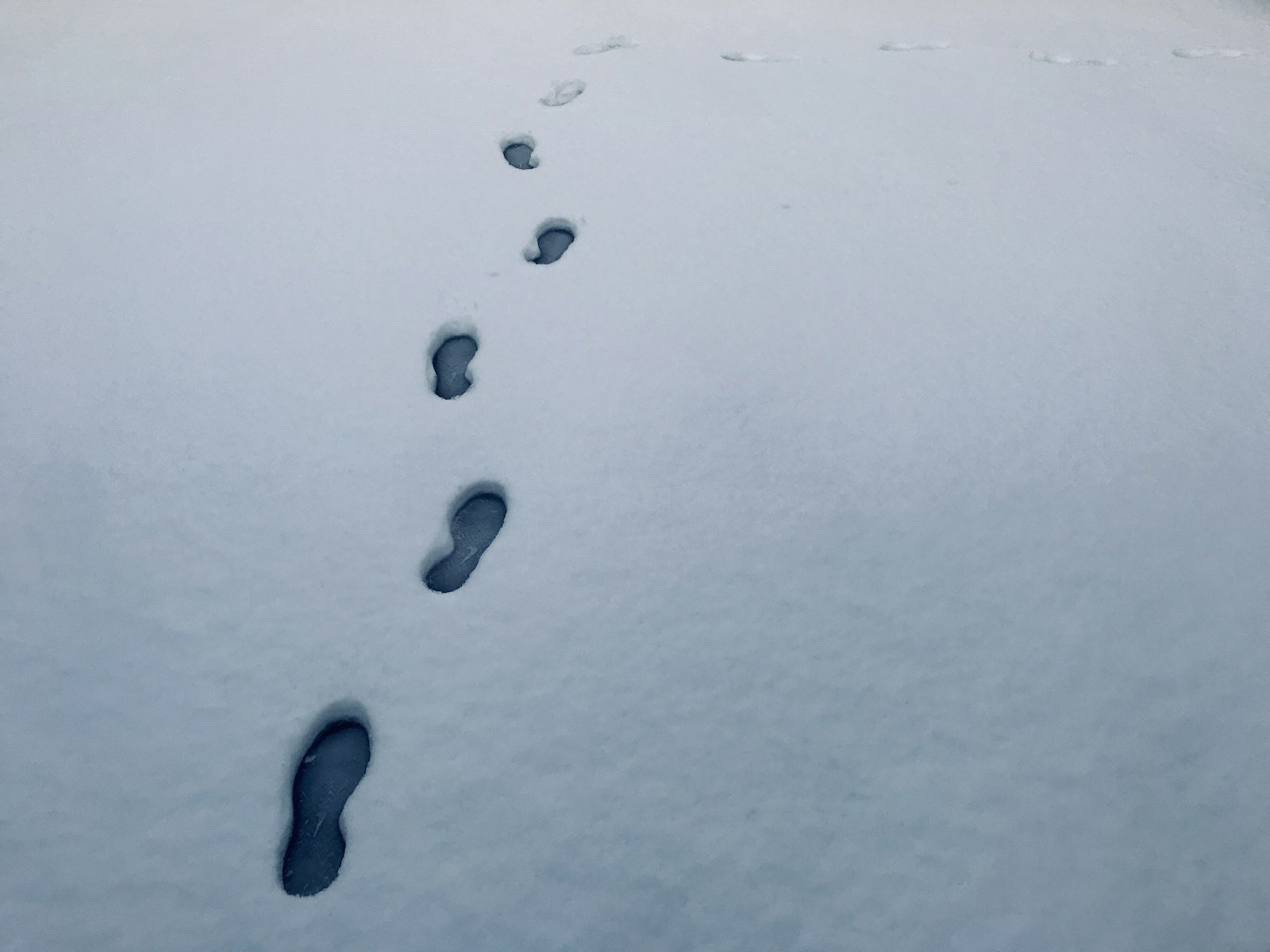
I walk just ahead, where you can see me
My own inquiry has been a road for twenty-five years now, and I keep going on it, just ahead of you — far enough along to show you that the ground holds.
I make no promise about when your night ends. What I offer, here and while the night lasts, is the company of someone for whom finding the way matters as much as it does to you.
At night, it helps to hear another person's footsteps nearby, and to be sure that this person is in the same dark and knows it well.
Spiritual awakening is here, even in your darkest night
So, does the dark night of the soul come before spiritual awakening, or after it? Or is the night a symptom of awakening? Examine all three questions, and each places awakening somewhere other than here: later than the night, earlier than it, or hidden behind the night, to be read from its signs. Yet the word "awakening" points to you, aware, and you are here.
If you wake at two in the morning and your questions start again, notice only that you know it is dark. Stay with that knowing for a few breaths, with no need to change anything else.
Your night may last a while longer, and you are here in it, aware. Spiritual awakening, in other words, does not wait for your dark night of the soul to end.