
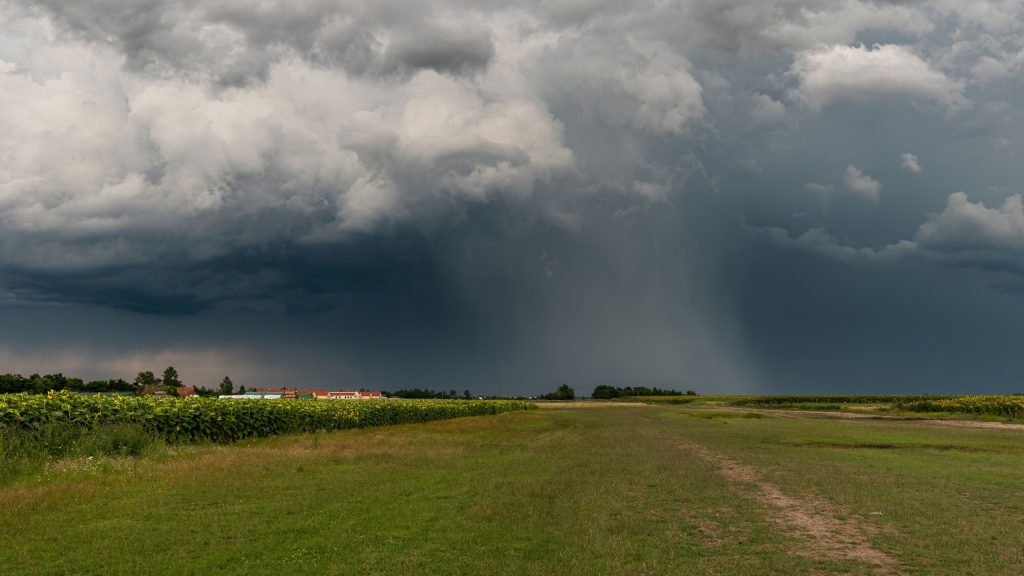
You don't actually choose whom you love — your only real choice is what you do once the pull has already arrived
Ask whether you chose whom you love, and the quick answer is yes — or at least that you could have consciously made that choice, that with a little more sense you would have picked differently. You imagine love as a decision and treat it as one: you size someone up, you compare, you settle on whoever scores highest. It is a comforting story. It is also, looked at closely, not what actually happens.
Because the pull came first. Before you ran a single calculation, the object of your love was already fully there — already mattering, already pulling — and your reasons arrived only afterwards, like lawyers hired, pointlessly and too late, to defend a verdict that your heart had quietly, already, irrevocably reached. You did not choose. What follows is why you never could, and where your real freedom actually lives — which is not where you would intuitively look for it.
You were taught to treat love as a decision — something to weigh, pick, and justify like any other choice
From early on, you were asked and you learned to treat love as procurement. To know your standards. To weigh the candidates, pick the best fit, and be ready to justify your choice to the world. This is the same model you were given for your career and material goods — assess, decide, optimise — and it has the deep appeal of (seemingly) putting you in charge.
On paper it sounds responsible. Who would argue against choosing wisely? But notice what this model assumes: that the love comes after the assessment, as its result — that you feel the pull because you approved it. Set honestly that assumption against your own experience for a moment, and watch it fall apart.
Notice the pull was there before you had any say in it
Think back to the last time someone got under your skin. Did you convene a meeting and decide to be drawn to them? Or were you, at some point, simply smitten — and only later went looking for the underlying reasons? The pull does not wait for your permission. It is reported to you, not issued by you. By the time "should I?" shows up, the "I already do" has long since taken the most prominent seat in the room.
Nowhere is this clearer than when you fall for someone you had no business wanting — the wrong person, the worst timing, exactly whom your standards ruled out. You did not love them in spite of your criteria. They had nothing to do with it. The pull came from somewhere such criteria could not reach.
Why your mind insists it chose anyway — back-filling reasons after the fact, because it cannot bear that something this large was out of its hands
Your mind will not accept this. It needs to have chosen, so it rewrites the record: it lists the qualities, recites the merits, presents the love as a sound call it made based on the available "evidence". The reasons are real enough — but they are simply not the cause. They were gathered afterwards, to dress what had anyway happened, long before.
Your mind behaves like this because the alternative frightens it. If a feeling this large arose without its consent, what else runs without its approval? So it claims authorship of the very event it most wants to own. The exact same refusal hides inside the urge to control everything, and it costs you far more than it ever protects.
This is the same wall your effort keeps hitting — you cannot force sleep, cannot summon calm, cannot command attraction
None of this is unique to love. It is the wall your effort runs into everywhere it matters most. You cannot force yourself to sleep — such an attempt is exactly what keeps you awake. You cannot order yourself to feel calm — such an imperative is itself a tension. And you cannot will an attraction into being, or into oblivion, however good your reasons.
I have followed this wall before, to the point where the rational mind finally gives out. The pattern repeats: your "free" will is sovereign over the outer world and almost powerless over the inner world. True attraction lives only there.
Plato called eros a divine madness — a force that seizes you, not a verdict you reach
This is very old knowledge. In the Symposium, Plato lets his speakers circle the same fact from every side: eros is a kind of possession — a "divine madness," a force that overtakes you rather than a conclusion you arrive at. The lover does not decide. The lover is just struck — and there's nothing they can do about it.
Strip away the mythology and the observation still stands. Whatever attraction is, it behaves like weather, not like policy. It gathers, it arrives, it breaks — and the most accomplished, rational person you know is exactly as defenceless before it as anyone else. That is not a flaw in your competence. It is the nature of attraction itself.
Here is the release: you can stop the guilt of loving whom you "shouldn't", and also stop trying to manufacture a feeling that does not answer to you
If, indeed, you did not choose love, you can set a great deal of suffering down. The guilt of loving the "wrong" person loosens, because a feeling you did not author is not a crime you committed. The shame of not loving the suitable, sensible person everybody approved of eases too. You were not withholding a decision. There was no decision to withhold in the first place.
And you can abandon the exhausting project of producing love by will: talking yourself into it, performing it, waiting for the feeling to obey the plan. This will not work. The relief in that is enormous, and it is simply the truth catching up with you at last.
What you do choose comes after the pull, not before it — whether you honour what arrived, act on it, or let it pass
So is there no freedom here at all? There is — but it lies further in than where you were looking. You do not choose the pull. You choose what you do with it: whether you act on it or let it pass, whether you tell the truth about it or hide it, whether you stay once the first madness quietens and only the actual person remains — which is where love either becomes a practice or turns out to have been mere weather or a passing fad.
That is all the agency you get, and it is more than enough. The only true need is to love. That need is met in the loving — not in being matched to the perfect partner, not in choosing flawlessly, but in what you give once the pull has chosen for you.
So — can you choose whom to love? This question dissolves into irrelevance: love was always gifted to you, never chosen, and your only freedom is what you make of this greatest of presents
So — can you choose whom to love? By now the question should have come apart in your hands. You cannot choose the person — it was given to you, not selected by you. What you can do — the one move that was always and only yours — is decide what you make of what actually arrived.
In a similar vein, I did not choose my work either. The pull toward the threshold I am now occupying by endlessly exploring it (and endlessly exploring by occupying it) was no decision I reached on my own. What I chose was to finally and wholeheartedly say yes to this inescapable reality, and that yes is also the only invitation I could ever pass on to others — a response to something that had claimed me first, not a pitch I devised. That is the freedom worth having: not the fantasy of engineering your own heart, but the dignity of answering, fully, for what you do with a heart you did not engineer.