

Why ordinary life turns vivid the moment you stop reaching past it — what your communion with the divinely mundane gives you back
There is a moment that visits you sometimes, if you are paying a certain kind of attention, and it makes no sense on the surface. The steam off the coffee, the weight of the cup in your hand, the light moving across the kitchen floor — and for one breath it is almost too much. More vivid than a cup of coffee has any right to be. Then the breath passes, the phone lights up, and it is just coffee again, just a floor, just a Wednesday.
That "too much" is what I want to put in front of you. I have come to call it the blessed exaggeration — the way the most ordinary things, given your whole attention, swell to a size you had stopped believing they had. Nothing was added. For one breath you simply saw the divinely mundane at its real scale. What follows is about what makes that breath longer — and what your life becomes when it does.
What a normal day feels like when you are only passing through it — grey, weightless, an item to tick off a never-ending list
On most days, the coffee is only fuel, and the floor is only the place you stand while you answer the message. You are not in the morning at all. You are already in the meeting. The day arrives as a list, and you move down it — shower, commute, lunch eaten at the desk and barely tasted — ticking each one off, until a whole afternoon has gone by that you could not describe an hour later if someone asked you to.
This is the quiet ache underneath a life that, on paper, is going perfectly well. You have the things you meant to have. You move through your days at a clip. And still something has dimmed the colour — a flatness, a sense that you are getting through your one and only life rather than living inside it. You would not call it suffering. The feeling is too grey for that. It is, more than anything, the suspicion that this is all there is.
What communion actually asks — not a method, not more effort, only your whole attention on the thing in front of you
So what turns the grey back into colour? Not a technique. I have no method to hand you here, and I am wary of anyone who tells you the sacred can be reached in five clean steps before breakfast. Communion is not something you do to the ordinary. It is closer to something you stop doing. (Though "doing" and "not doing" both lose their footing here, which is part of the point.)
You stop reaching past the cup for the next thing. You stop narrating the morning while you are still standing in it. For one unhurried breath you give your whole attention to the thing in front of you — not to squeeze a lesson from it, not to feel better, only to be with it. The coffee. The face across the table. The cold doorknob under your palm. That is all the practice is, and it asks more of you than any technique, because the mind would so much rather be somewhere it can manage. The less you do to the ordinary, the more of itself it gives back — the same inversion I have followed before, at the scale of a whole life.
Why the ordinary at its true size can feel like exaggeration when you have spent a lifetime seeing it shrunk
Here is why the word exaggeration fits. When you turn to the ordinary this way, it does not stay ordinary. It enlarges. The cup of coffee becomes almost unbearably specific — this heat, this particular bitterness, this one morning that has never happened before and will never happen again. And something in you protests: surely this is too much, surely you are making more of the moment than is actually in it.
But you are not making more of it. You are, for once, making the right amount of it. (Or making nothing of it at all, and finally letting it be the size it already is.) The exaggeration only looks like exaggeration against a lifetime of seeing the ordinary shrunk — turned down, sped past, filed under "nothing happening." Set beside that shrunken version, the true size looks like a wild overstatement. It is not. It is the first accurate measurement you have taken in years. That is the blessing: nothing is inflated. You are simply, for once, seeing what was there the whole time.
The monk who met God among the pots and pans — and what he knew at the kitchen sink
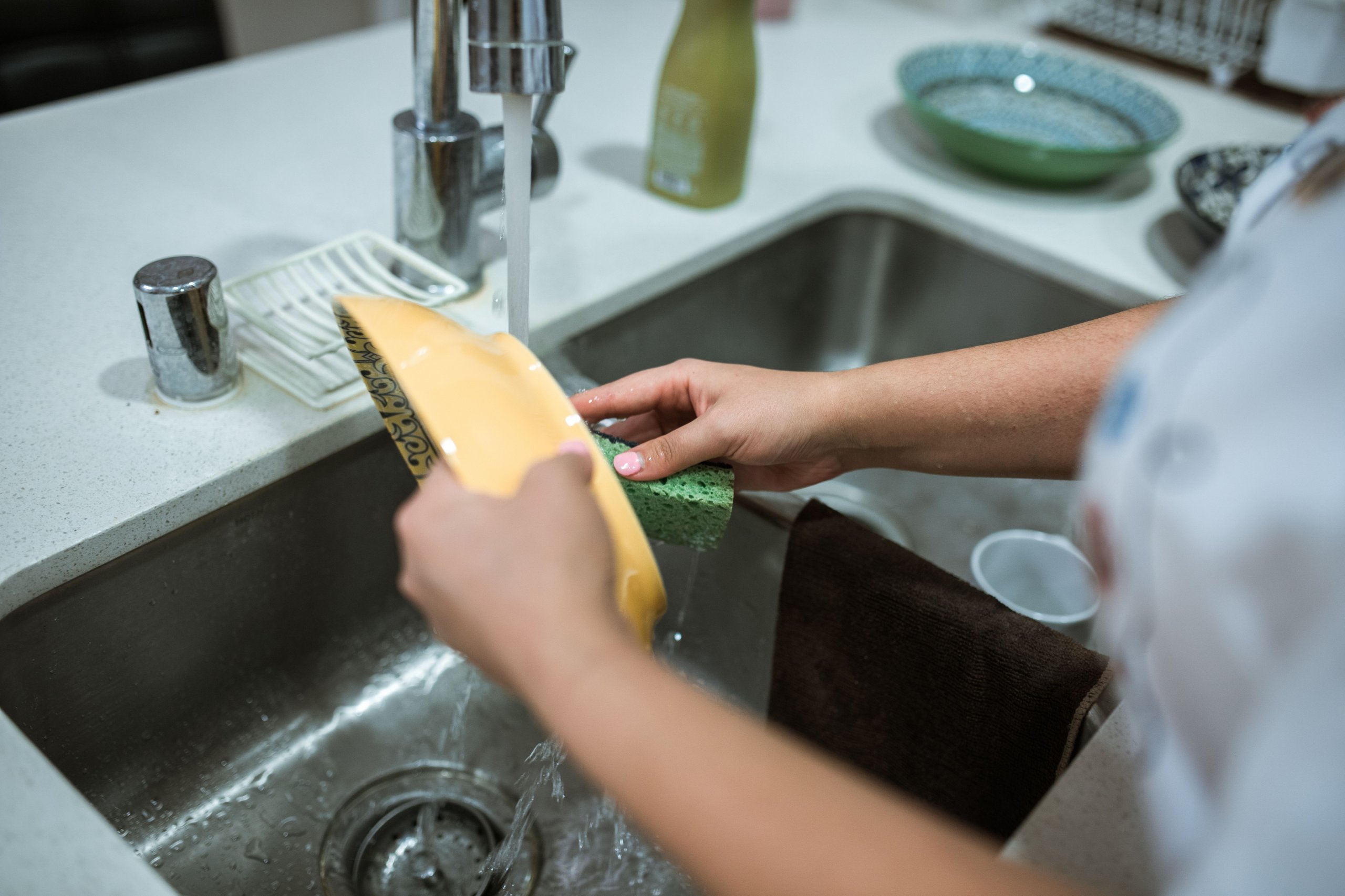
None of this is new, of course. Three and a half centuries ago, a Carmelite lay brother named Lawrence spent his days in a monastery kitchen in Paris, among pots he had no particular wish to scrub. And there, with his hands in the grease and the cooling water, he found what the others were straining towards in the chapel.
He came to call it the practice of the presence of God — the discovery that the sacred was not reserved for the great religious moments, but waiting in the most menial task, available to anyone who brought their whole attention and a little love to it. He was not reaching past the dishes towards God. He was meeting God in the dishes. The kitchen was not the obstacle between him and the sacred. The kitchen was where the sacred actually was.
That is the divinely mundane, named four hundred years before I reached for the phrase. The pots were not in his way. They were the way. So is whatever waits in front of you right now.
Why chasing the extraordinary keeps the divine out of reach - when it was here all along, in the ordinary hours you keep moving through
Now — here is the trap, and it is a quiet one. The more you go looking for the sacred somewhere special — the retreat, the ceremony, the breakthrough, the peak experience you read about — the more you train yourself to believe it lives anywhere except here. Each search past the ordinary confirms, one more time, that the ordinary is empty. Trip by trip, you teach yourself that the divine is an elsewhere.
And so you keep moving through the ordinary hours of your actual life as though they were a waiting room — the dull stretch between the real moments, to be endured at speed until the next high arrives. But it never lasts. You come home from the mountain and the kitchen is still the kitchen. The divine you went looking for was never on the mountain. It was here all along, in the hours you kept rushing through to reach something better.
Why the door is the senses and not the mind — the steam off the coffee, the warm weight of the cup, the light on the floor
If communion is not a thought, then the way in is not the mind. It is the senses. The mind wants to understand the morning. The body simply receives it — the steam off the coffee before you have named it as steam, the warm weight of the cup in your palm, the particular grey of the light on the floor. The body is there first, every single time. The sentence comes second, if it comes at all.
This is good news, because it means you do not have to believe anything, or reach any special state, or get your spiritual life in order first. You have to feel the cup. That is the entire instruction. The recognition does not begin in the head and travel down — it begins in the hand, the throat, the chest, and the mind lags behind, the way it always does. So thinking will not get you to the divinely mundane — drop, for a moment, into whatever your body is already touching. A few small, unremarkable actions return me to my own senses many times in an ordinary day.
What the waiting costs you — a whole life of small moments declined while the extraordinary never arrives
I want to be honest about what is at stake here, because it is not small. A life is not made of the big moments. There are only a handful of those, and most of them do not even announce themselves until they are already over. A life is made, almost entirely, of ordinary mornings — of cups of coffee and commutes and the faces of the people you live with, seen across a thousand breakfasts.
If you spend those mornings reaching past them towards something better, you do not lose a few dull hours. You lose the actual material of your life — declined, one ordinary moment at a time, while you wait for an extraordinary one that mostly never comes. And the cruelty is this: the very thing you were waiting for was living inside the moments you kept refusing. The waiting was the only thing standing between you and your own life.
What changes when a normal day stops being something you escape — and your own life, at last, becomes the place you constantly live in
So what changes? Not your circumstances, at first. The same kitchen, the same commute, the same unremarkable day. What changes is that you stop trying to get out of it — and a life you are inhabiting, rather than escaping, is a wholly different thing (though it is, of course, the very same life — YOUR life).
It does not happen all at once. The grey closes back in. You forget for days at a time. Then some morning the light on the floor catches you off guard, and you stay for one more breath. The breath lengthens. The forgetting shortens.
I will not pretend to you that the ordinary is always gentle, or that I meet it cleanly myself. Some of what I have to deal with is hard — a body that no longer moves the way it once did, a voice that still stumbles at every third word I speak. And even so: Living with a seriously debilitating condition, I can now see that it will always be perfect, despite as well as because of what's happened and happening to me and around me. If the communion can reach that far, the cold cup of coffee is not a high bar.
You do not have to learn this on your own — I may be able to help you help yourself.
The blessed exaggeration was never an exaggeration. The ordinary was the divine the entire time, at its true size, only ever waiting to be encountered for exactly what it is. You do not need a better life. You need to start attending to the one you already have.